
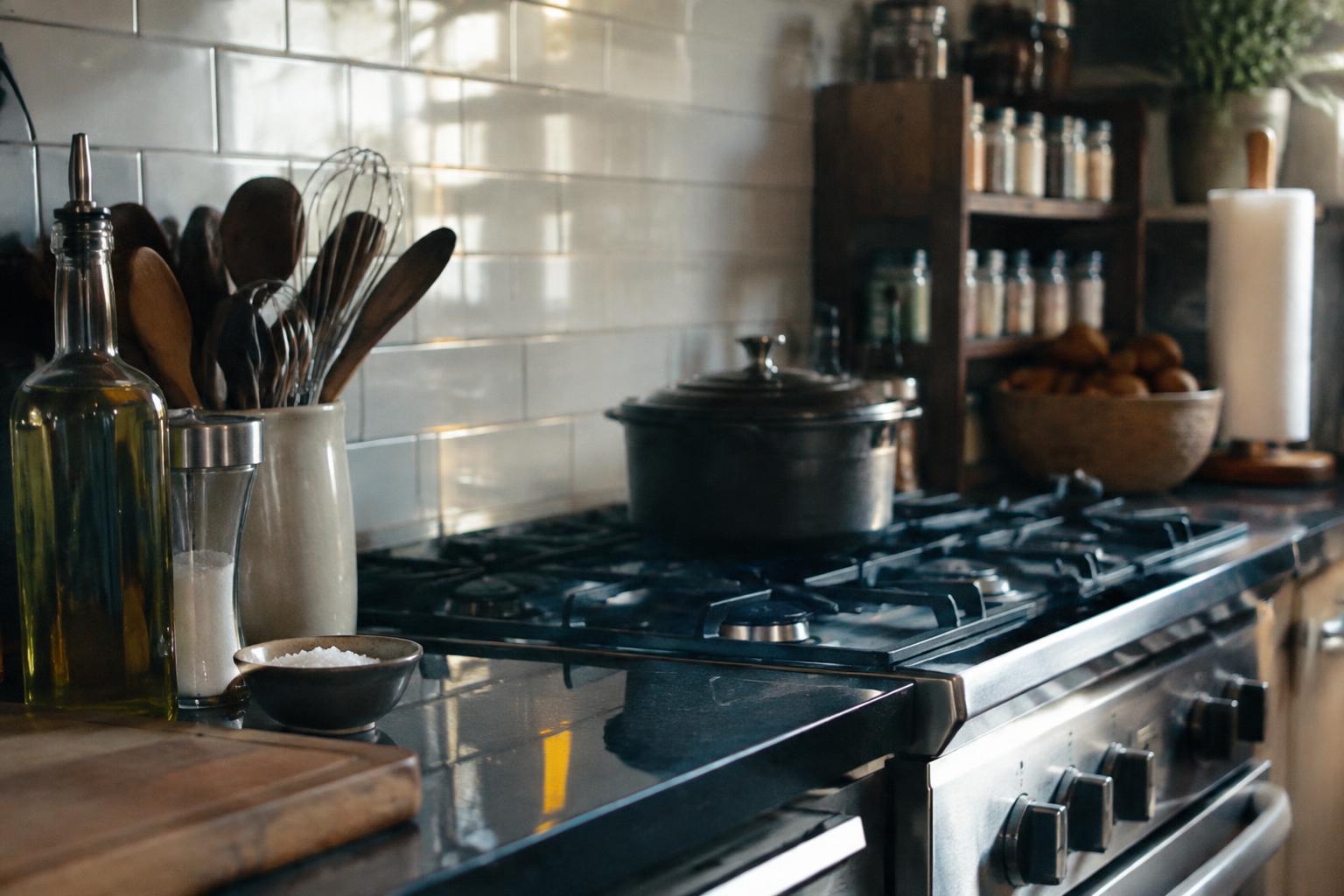
Reach for a spatula without crossing a hot burner, and cooking feels smoother; store paper towels beside the flame, and a small flare-up can become a fire. Keep frequently used, heat-tolerant tools within easy reach, while placing oils, aerosol cans, and other heat-sensitive items away from stove surfaces and radiant heat. Even a countertop a short distance from the burner can become hot during cooking.
Key Takeaways:
- Keep frequently used, heat-safe tools near the stove, such as a wooden spoon, metal spatula, and oven mitt, on a utensil rest or in a drawer away from open flames.
- Store cooking oils, butter, spices, and other heat-sensitive ingredients in a cool cabinet rather than beside the burner, where heat and light can speed flavor and quality loss.
- Keep paper towels, dishcloths, plastic packaging, and aerosol cans away from burners and hot cookware; store flammable items in a cabinet or drawer outside the stove’s immediate area.
What Belongs Near the Stove
Keep the cooking zone focused on tools and ingredients you reach for during active stovetop work. A short reach to a spoon rest, turner, or measured seasoning keeps your attention on the pan rather than sending you across the kitchen. Choose a stable, easy-to-clean spot outside the burner flames and away from hot cookware. Grouping a few daily essentials by task makes the counter more orderly, while leaving clear space beside each burner preserves room for a hot handle or lid.
| Item | Useful placement | Reason |
|---|---|---|
| Turner and cooking spoon | Utensil crock beside the work area | Ready for stirring and flipping |
| Tongs | Drawer or crock within reach | Easy to grab while handling food |
| Salt and pepper | Small tray near the prep zone | Convenient for seasoning |
| Heat-tolerant cooking oil | Cool, shaded cabinet nearby | Accessible without sitting beside a burner |
Everyday utensils and cooking tools
Set the tools you use repeatedly, such as a wooden spoon, silicone spatula, slotted turner, and tongs, in a sturdy crock or shallow drawer near your main burner. Keep handles upright and separated enough to grasp without fumbling, and place the crock beyond the burner’s flame path. A spoon rest beside the pan catches drips during stirring. Choose heat-rated utensils, with silicone heads specified for cooking use, and keep metal tools from resting against a hot pan.
Heat-tolerant oils and seasonings
Keep a small working supply of cooking oil and frequently used seasonings within easy reach, but not directly beside the flame or on a warm backsplash ledge. A capped bottle of refined avocado or canola oil suits higher-heat cooking better than delicate finishing oils; use a small container to limit repeated exposure to air and light. Salt and pepper fit neatly in a covered tray, while labeled, closed containers reduce spills near the stovetop.
What to Keep Away from Heat
Storage beside a burner exposes more than food to repeated temperature swings: cabinet interiors, packaging, and small appliances also warm during cooking. Keep items that depend on cool, stable conditions in a pantry, refrigerator, or closed cabinet farther from the range. Heat-sensitive goods often lose quality before they show obvious damage, while some household materials become a fire hazard. Their labels and storage instructions provide useful limits, especially for products kept in original containers.
Foods that lose freshness or quality
Chocolate softens and develops a pale surface when warmth causes cocoa butter to separate; nuts and seeds turn rancid faster as their oils oxidize. Store both in a cool, dry cupboard, and refrigerate or freeze them when the package directs. Coffee beans and ground coffee also lose aroma faster near heat, so keep them in an airtight, opaque container away from the stove. Stable, cool storage protects flavor, texture, and the natural oils in these foods.
Flammable, meltable, and heat-sensitive items
Paper towels, cookbooks, cardboard packaging, and cleaning sprays should stay clear of burners, where flames or hot surfaces can ignite or damage them. Plastic utensils and storage containers can soften or warp beside a range, while aerosol cans must be kept away from heat according to their labels. Place oven mitts and dish towels on a hook or shelf outside the stove’s immediate reach. Keep combustibles clear of burner flames and hot cookware.
- Move spare matches out of drawers beside the range.
- Keep rechargeable batteries away from warm appliance surfaces.
- Store wooden cutting boards upright in a cooler cabinet.
Safe Storage for Oils, Spices, and Dry Goods
Storage conditions shape how quickly cooking oils turn stale, how well spices retain their aroma, and whether dry goods remain usable. Heat, light, and air speed flavor loss, while oil-soaked packaging near an open flame adds a preventable fire hazard. Keep ingredients in containers suited to their contents, and place them where stove heat does not reach. A tightly closed bottle of olive oil, for example, stays in better condition away from a sunlit window and hot cooktop.
| Item | Storage condition | Reason |
|---|---|---|
| Cooking oils | Cool, dark cupboard; tightly capped | Slows oxidation and rancidity |
| Ground spices | Opaque, sealed container | Limits light and air exposure |
| Flour and grains | Dry, airtight container | Reduces moisture and pest access |
Choosing cool, dark locations
Choose a pantry shelf or closed cupboard away from direct sunlight and the radiant heat of the oven. Clear glass jars look tidy, but light degrades spice color and aroma, so store them inside an enclosed cabinet or use opaque containers. Oils also lose quality faster beside warm appliances; keep bottles capped in a consistently cool spot rather than on a sunny sill. A shaded pantry shelf preserves paprika’s vivid color and the fragrance of whole cumin seeds.
Keeping containers sealed and away from burners
Keep lids secure on oils, spices, flour, and grains to limit air and moisture exposure. Set containers well clear of burners, where a flare-up or hot pan can ignite spilled oil or packaging. Never store paper bags or oily cloths beside an open flame; transfer dry goods to clean, food-safe containers with snug-fitting lids. Wipe oil residue from bottle exteriors before returning them to storage, especially after pouring near the cooktop.
Organizing Cabinets and Counters Around the Stove
Arrange storage according to how you cook, keeping frequently used tools within reach without crowding the range or compromising cleanliness. A clear separation between the cooking zone and nearby storage reduces accidental contact with hot burners, while closed cabinets protect equipment from splashes and grease. Place items you use together in the same accessible area, such as a spatula beside the utensil crock, and reserve a clean counter space for setting down a hot pan.
Creating accessible cooking zones
Group tools by task so you can reach them without leaning across a burner. Keep spatulas, tongs, and a ladle in a stable, washable utensil holder beside the range, with pot holders in a nearby drawer rather than on the oven handle. Store everyday cookware in the closest suitable cabinet, leaving handles turned inward when pans sit on the stove. Keep reach paths clear of cords and containers that could snag as you move a hot pot.
Keeping counters clear of clutter
Leave the counter beside the stove open for a landing space, not long-term storage. Move mail, paper towels, cookbooks, and loose packaging away from burners, since these items can ignite if exposed to heat or a flare-up. Wipe grease and food residue from the backsplash and counter after cooking, using a surface-appropriate cleaner. Keep combustible items back, and place only a lidded, heat-resistant utensil crock within the cooking zone.
- Use a drawer divider to separate measuring spoons from sharp tools.
- Choose a non-slip liner for a cabinet holding frequently used pans.
- Keep cabinet doors fully closed while cooking.
Heat and Fire Safety Checks
Make safety checks part of your kitchen routine, especially after moving cookware, adding a small appliance, or changing how you store supplies. Look for conditions that can lead to ignition, heat damage, or blocked ventilation, rather than relying on items’ usual positions. A quick inspection before cooking and a more thorough review during regular cleaning can catch problems early. Pay particular attention to combustible materials, greasy residue, and anything that could obstruct a burner control or oven vent.
Maintaining clearance from burners and oven vents
Keep towels, paper packaging, wooden utensils, and other combustible items outside the burner area and away from the oven’s exhaust path. During a kitchen check, move loose objects from the cooktop and confirm that cabinet doors, hanging tools, or countertop appliances do not restrict vent airflow. Follow the clearances specified in your appliance manual, since vent locations vary by model. Never drape fabric over an oven handle, where it can approach a hot surface or open flame.
Checking for heat damage and buildup
Inspect nearby cabinet edges, container lids, and wall finishes for discoloration, warping, softened plastic, or a persistent hot odor, signs that stored items are too close to a heat source. Remove grease and dust from the range hood’s filters according to its manual, since residue can ignite if exposed to sustained heat. Replace damaged containers and relocate affected supplies. Grease buildup is flammable, so check around the hood filter and backsplash during routine cleaning.
| Check point | Look for | Safety action |
|---|---|---|
| Burner area | Paper, cloth, or utensils nearby | Clear the cooktop before lighting |
| Oven vent | Blocked airflow or items on the handle | Keep the exhaust path unobstructed |
| Cabinet edges | Warping, discoloration, or hot odor | Move stored goods farther away |
| Range hood | Grease or dust on the filter | Clean as directed by the manual |
Conclusion
Keep frequently used, heat-safe tools such as a wooden spoon or metal spatula within easy reach, while storing cooking oil, spices, paper towels, and plastic packaging away from burner heat. Place dry goods in closed cabinets, and keep oven mitts and dish towels clear of open flames and hot surfaces. Leave the area around each burner uncluttered, and store flammable items in a cool cabinet rather than beside the stove.
FAQ
What should I keep near the stove for everyday cooking?
Keep frequently used utensils and heat-tolerant cooking essentials within easy reach, but not close enough to touch a burner or block a vent. Store items that can melt, warp, spoil, or ignite in a cooler location, and keep counters clear around the cooking area.
How far should things be from a stove burner?
Keep storage items outside the burner area and away from flames, hot surfaces, and oven vents. The safe clearance depends on the appliance and its manufacturer’s instructions, so avoid placing anything where it could be heated or knocked onto a burner.
Can I store cooking oil and spices beside the stove?
Store oil and spices in a cool, dark place, preferably in sealed containers, rather than beside a hot burner. Brief access during cooking is generally practical, but repeated heat and light exposure can reduce quality, and oil should be kept away from open flames.
What are common mistakes when organizing storage around a stove?
Common mistakes include placing paper towels, packaging, or meltable tools near burners, storing food where heat and light can degrade it, and letting clutter build up on counters. Check nearby items for heat damage or residue, and follow the appliance’s clearance guidance.
Is it worth reorganizing what I store near the stove?
Yes, placing frequently used tools nearby and heat-sensitive or flammable items farther away can make cooking more convenient and reduce avoidable risks. You do not need special organizers, but the best arrangement depends on your appliance, available storage, and the items you use most.