
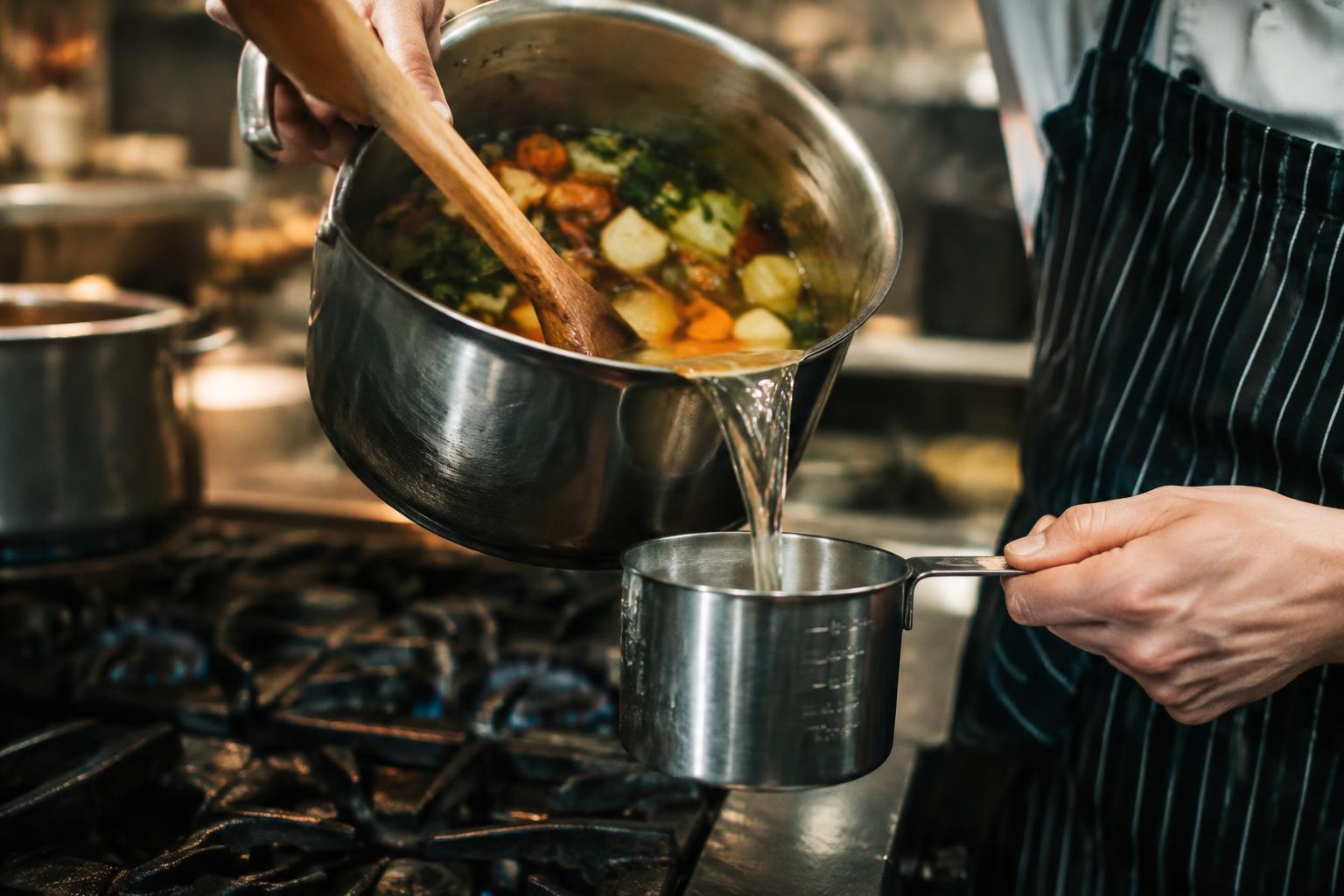
An extra splash of broth can turn a thick stew watery, while excess pasta water can dilute a carefully balanced sauce. You can often correct the texture without sacrificing flavor, but rushing to boil it down risks overcooking tender ingredients or making the dish too salty. The best fix depends on what is cooking and how much liquid remains.
Key Takeaways:
- Identify what the dish needs before acting: a thin soup often benefits from simmering uncovered, while a sauce can be thickened with a cornstarch slurry or a beurre manié.
- Remove liquid quickly with a ladle when the food is already cooked or delicate. For grains and pasta, draining through a colander prevents them from becoming waterlogged.
- Restore flavor after reducing or draining excess liquid by tasting for salt and acidity, then adjusting with measured additions such as salt, lemon juice, or vinegar.
Assessing the Extra Liquid
Start by identifying where the excess sits: pooled on the surface, surrounding solid ingredients, or absorbed into grains and vegetables. Use a spoon to gauge whether the liquid is a thin layer or fills much of the pot, then note whether it is clear, oily, starchy, or thickened. That distinction describes the dish’s current state, while the liquid’s location and texture reveal how it is affecting each component.
Check the recipe’s intended consistency
Compare what you see with the recipe’s stated finish, such as a sauce that coats a spoon, a stew with visible broth, or risotto that settles softly when stirred. Look for descriptions of thickness and serving style, not just the ingredient list. A glossy curry sauce should cling to vegetables, while soup is expected to flow freely; the intended consistency gives you a practical reference for judging whether the added liquid is actually excessive.
Consider cooking time, heat, and ingredients
Current texture reflects more than the amount poured in: a covered pot traps steam, while an uncovered simmer lets moisture escape. Note how long the dish has cooked and whether ingredients such as rice, lentils, pasta, or mushrooms are still releasing or absorbing water. A watery appearance early in cooking may be temporary, whereas tender vegetables sitting in a thin sauce indicate a different balance. Record whether the liquid is still changing during cooking.
- Check the pot’s fill level against the ingredient line.
- Notice whether bubbles break across the whole surface or only at the edges.
- Look for separated oil beads or a cloudy, starch-rich appearance.
Choosing a Rescue Method
Match the repair to both the dish’s structure and the amount of excess liquid. A loose pan sauce responds differently from a stew with swollen vegetables, while a watery risotto needs care to preserve its creamy texture. Choose the least disruptive fix that corrects the consistency: use evaporation for excess broth, a compatible thickener when the liquid is already integrated, or removal when a dish contains separable liquid. The cooking vessel and remaining cook time also shape the best choice.
Simmer uncovered to reduce the liquid
For soups, stews, curries, and pan sauces that taste properly seasoned but look thin, simmering uncovered lets water escape without adding another ingredient. Keep the heat at a gentle bubble and stir more often as the volume falls, especially in a wide skillet where sauce can catch at the edges. Use a partially covered pot if splattering is a concern. Protect delicate ingredients by lifting out tender fish or vegetables before reducing the surrounding broth.
Thicken with a suitable ingredient
When excess liquid is already mixed through the dish, choose a thickener that fits its texture. Stir a cornstarch slurry into simmering gravy or sauce, adding it gradually until the liquid lightly coats a spoon. For soup, mashed beans, potato, or a small amount of instant potato flakes can add body; in a casserole, breadcrumbs absorb moisture without requiring a separate pan. Add thickener in small amounts, since too much can leave a pasty or gummy texture.
Remove or absorb excess liquid
If liquid pools around solid ingredients, remove it rather than changing the entire dish. Ladle broth from a stew, or carefully pour liquid from a skillet while holding the food back with a slotted spoon. For a casserole or cooked vegetables, drain through a colander when the pieces can tolerate handling; blot surface moisture with a clean paper towel when only a little remains. Keep the solids intact by draining briefly instead of pressing or squeezing them.
| Dish condition | Suitable method | Practical cue |
|---|---|---|
| Thin soup or pan sauce | Simmer uncovered | Liquid is seasoned and not yet integrated into a delicate ingredient |
| Gravy or smooth sauce | Add a cornstarch slurry | Stir gradually while the sauce simmers |
| Stew with pooled broth | Ladle off excess liquid | Solids can remain in the pot |
| Casserole or cooked vegetables | Drain or blot | Pieces hold their shape during handling |
Preserving Flavor and Texture
As you correct the consistency, protect the dish’s defining flavors and the texture of its main ingredients. A sauce reduced too far can taste harsh, while tender vegetables or fish can break apart under prolonged heat. Keep the main ingredients intact by removing them temporarily when practical, then return them once the liquid reaches the right body. For a stew, lift out delicate greens before simmering the broth.
Taste and adjust seasoning after reducing
Once excess liquid has evaporated, taste the concentrated sauce before adding salt, herbs, or other seasonings. Reduction intensifies salt, acidity, sweetness, and spice, so seasoning the dish beforehand can leave it overly salty or sharp. Stir thoroughly, then adjust in small amounts: a pinch of salt, a few drops of vinegar, or a little fresh lemon juice. In a pan sauce, add citrus off the heat to preserve its bright aroma.
Add ingredients carefully to avoid over-thickening
For a thinner sauce that still needs body, add a thickener in measured increments rather than tipping it straight into the pot. Whisk cornstarch with cold water to make a smooth slurry, then stir in a little at a time and let the sauce simmer briefly before judging its texture. Starches thicken as they heat, so adding more too soon can turn gravy pasty. For a creamy soup, blend a small ladleful of beans back into the pot.
- Remove bay leaves before blending a sauce.
- Use a fine-mesh sieve to strain lumps from gravy.
- Fold in soft herbs after taking the pan off the heat.
Tips for Preventing Too Much Liquid
Set up your ingredients and cooking conditions before the pan heats, since moisture comes from both measured liquids and foods that release water as they cook. Match the amount you pour to the recipe’s stated yield, then account for produce, frozen ingredients, and covered cooking, which can all change how much liquid remains. A clear starting measure and a pan suited to the batch make it easier to control the dish from the first addition.
| Source of liquid | What to account for | Practical step |
|---|---|---|
| Broth or water | Recipe quantity and batch size | Measure before pouring |
| Fresh vegetables | Water released as they soften | Adjust added liquid to the ingredients |
| Frozen vegetables | Thawing moisture | Drain excess liquid first |
| Covered pot | Steam trapped under the lid | Follow the recipe’s lid instruction |
Measure liquids and account for watery ingredients
Use a liquid measuring cup for broth, stock, milk, or water, and measure at eye level on a flat surface. Read the ingredient list for tomatoes, zucchini, mushrooms, spinach, and frozen vegetables, since they release moisture during cooking. If you rinse canned beans or vegetables, drain them thoroughly before adding them. Count ingredient moisture as part of the dish’s total liquid, especially in soups, braises, and sauces with a covered simmer.
Add liquid gradually and monitor as you cook
Start with less than the full amount when the recipe allows, then pour in small additions as the ingredients soften. Stir well after each addition so you can judge the consistency throughout the pot, rather than at the surface alone. Keep the lid position consistent with the recipe, because a tightly covered pan retains steam while an uncovered simmer lets moisture escape. Pause between pours to see whether the rice, pasta, or vegetables have absorbed the latest addition.
Summing up
When excess liquid thins a dish, match the fix to its texture: simmer uncovered to reduce a sauce, ladle broth from a soup, or stir a slurry into a stew. Taste as the liquid concentrates, since salt and other seasonings become more pronounced. For a pasta dish, drain pooled liquid before adding cheese or another finishing ingredient. A controlled adjustment preserves the dish’s intended consistency without masking its original flavor.
FAQ
How long does it take to fix a dish with too much liquid?
Reducing excess liquid usually takes a few minutes to half an hour, depending on the amount and the dish. Simmer gently and check the consistency often, since cooking time varies and some ingredients can become overcooked if left on the heat too long.
Can I rescue a dish when I add too much liquid without changing its flavor?
You can often correct the consistency with little flavor change by simmering the dish uncovered or removing some liquid. However, reduction concentrates salt, spices, and other flavors, so taste the dish before adding more seasoning.
What is the biggest mistake to avoid when thickening a watery dish?
Avoid adding too much thickener at once, because it can make the dish pasty or gummy. Stir in a small amount, allow it time to take effect, and reassess before adding more; the right amount depends on the dish and thickener.
Can I use a different ingredient to thicken soup or sauce?
Yes, a compatible ingredient such as a starch slurry, flour, or blended cooked vegetables can thicken soup or sauce. Choose based on the dish, since starches can alter texture and flour may need cooking to avoid a raw taste.
Is it worth rescuing a dish after adding too much liquid?
Usually, yes, if the ingredients are still properly cooked and the flavor remains acceptable. If reducing would overcook delicate ingredients, remove some liquid or transfer them out temporarily while the remaining liquid simmers.