
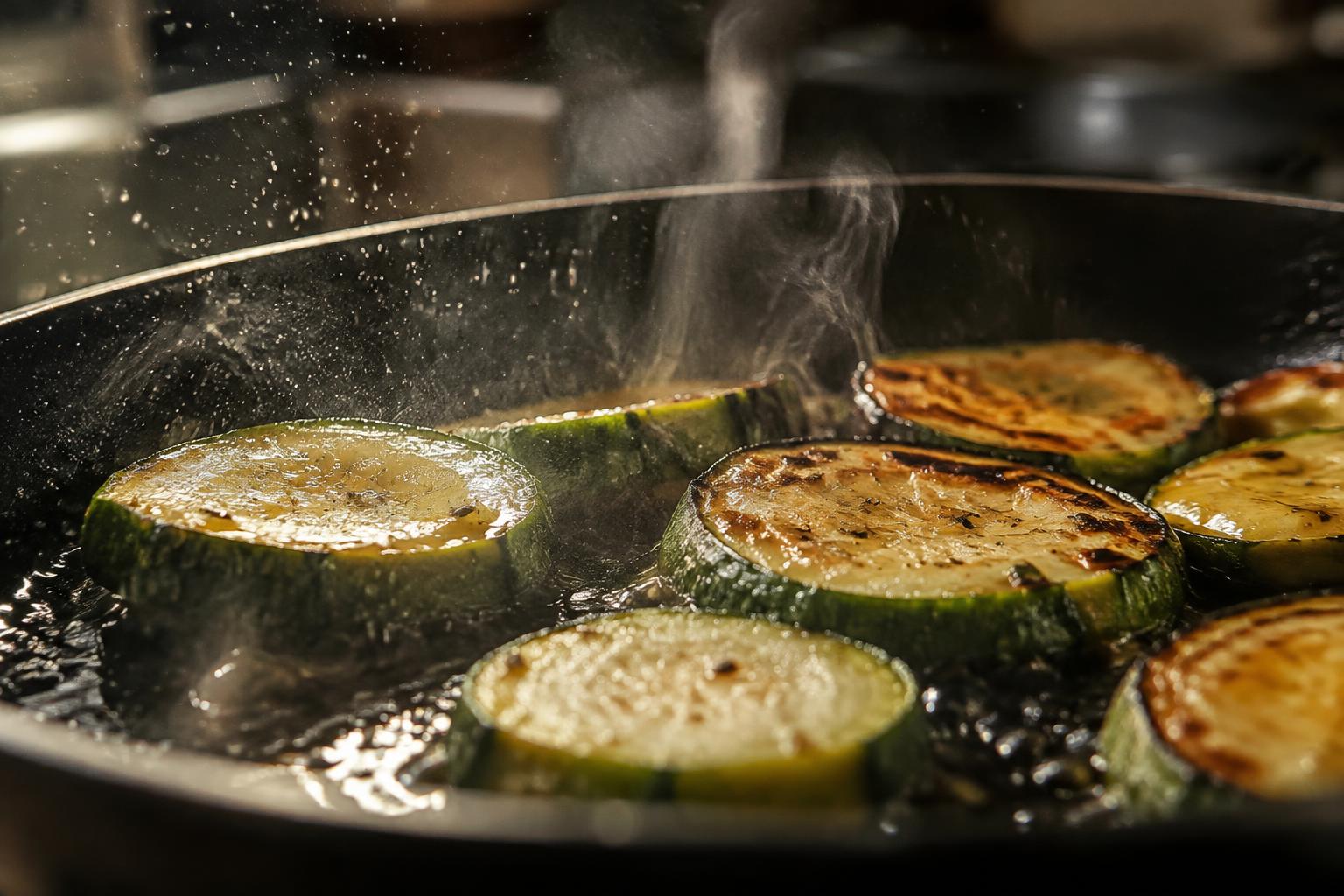
That skillet of vegetables often starts sizzling, then turns steamy as moisture escapes from their cells. The water is natural, but too much in the pan keeps vegetables from browning. When you understand how cut size, heat, and crowding affect evaporation, you can get deep, golden color without sacrificing tender centers or crisp edges.
Key Takeaways:
- Vegetables release water as their cells heat and soften. Dense cuts and water-rich vegetables, such as zucchini, can leave liquid in the pan before their surfaces brown.
- For better browning, dry vegetables after washing, cut them into even pieces, and spread them in a single layer on a hot, wide pan or sheet pan. Crowding traps steam and slows browning.
- Salt draws moisture to the surface, so add it shortly before cooking or after browning begins. Use enough oil to coat the vegetables lightly, then leave them undisturbed until they develop color.
Why Vegetables Release Water During Cooking
As vegetables heat, water inside their cells warms and moves toward the cut surface, where it escapes as steam or collects in the pan. Cooking also softens cell walls, releasing moisture that was held within the tissue. The amount you see depends on the vegetable’s water content, the condition of its cells, and how much surface has been exposed. Visible liquid is normal, particularly as the vegetable pieces heat through.
| Factor | Effect on water release |
|---|---|
| Heat | Warms internal moisture and drives it toward the surface |
| Cell walls | Soften during cooking, allowing more water to escape |
| Cut surface | Exposes more tissue and creates more routes for moisture to leave |
How cell structure and cut size affect water release
Cell structure determines how firmly a vegetable holds its water as heat softens the tissue. A cucumber’s tender flesh releases moisture readily, while dense carrot tissue retains its shape longer. Cutting changes the exposed area: diced zucchini has more cut surface relative to its volume than a whole zucchini, so moisture has more paths out. Smaller pieces expose more cells, and a knife cut that crushes tissue can rupture additional cells at the surface.
Which vegetables tend to release the most moisture
Water-rich vegetables such as zucchini, mushrooms, tomatoes, spinach, and eggplant often release noticeable liquid as their tissues warm and soften. Mushrooms contain no plant cell walls, but their porous structure holds water that escapes during cooking. Leafy greens collapse quickly as their cells lose support, while tomatoes release juice from their seed chambers and flesh. Zucchini and mushrooms commonly leave liquid in a pan before firmer vegetables such as carrots do.
How to Get Better Browning
Good browning starts with limiting the moisture that sits on vegetable surfaces and giving each piece direct contact with the cooking surface. Cut vegetables into similar sizes so they finish at a similar pace, then handle them in ways that keep released liquid from pooling around them. A dry exterior and uncovered surface contact encourage the savory, browned crust you want, while a crowded pan traps steam between pieces and leaves their edges soft.
How to dry, salt, and space vegetables
After washing, spin leafy vegetables in a salad spinner and pat firm pieces dry with a clean towel; droplets left on broccoli florets or sliced zucchini become steam. Salt eggplant or mushrooms shortly before cooking, then blot visible moisture if it collects. Arrange pieces in a single uncrowded layer, leaving gaps between them so vapor can escape. If the pan is full, cook a second batch rather than stacking vegetables on top of one another.
Tips for turning and cooking in batches
Let vegetables sit undisturbed long enough to form browned contact spots, then turn them with a thin spatula or tongs rather than stirring constantly. Move pieces only after they release easily from the surface; forcing them can tear soft flesh. Cook dense vegetables in manageable batches, transferring finished pieces to a warm plate while the next batch cooks. Return batches briefly at the end if needed, and add delicate herbs only after cooking.
- Use a salad spinner for damp leafy vegetables.
- Choose a thin spatula for tender slices.
- Keep finished batches on a plate, not under a lid.
Factors That Affect Browning
Pan geometry, cooking temperature, and fat type shape how quickly vegetables shed surface moisture and develop color. Each factor affects heat transfer at the point of contact: a heavy pan holds heat as vegetables are added, while a crowded surface cools quickly. Consistent contact with hot metal supports even browning; excessive heat, on the other hand, can scorch delicate pieces before their centers soften. The best results depend on matching the pan and fat to the vegetable and batch size.
Pan material, surface area, and heat level
Stainless steel and cast iron retain substantial heat, while a thin pan loses temperature more readily when you add a large batch. A broad skillet gives pieces room to touch the cooking surface instead of steaming against one another; a narrow saucepan traps moisture. Set the burner to medium-high for firm vegetables, adjusting as the pan responds. Steady, direct heat encourages a browned contact surface, while a smoking pan can burn the exterior and leave bitter marks.
Oil, crowding, and cooking time
Neutral oils with a high smoke point, such as refined avocado or canola oil, tolerate the sustained heat used for browning; butter browns quickly and its milk solids can burn. Coat the pan lightly so the vegetables make good contact without sitting in excess fat. Crowding releases moisture faster than it evaporates, softening the surface and slowing color development. A single, uncrowded layer gives each piece room to brown, while longer cooking deepens color but can dry out smaller cuts.
| Factor | Supports browning | Common drawback |
|---|---|---|
| Pan material | Heavy stainless steel or cast iron retains heat | Thin pans cool quickly under a large batch |
| Surface area | Broad skillet provides room for contact | Narrow cookware traps escaping moisture |
| Cooking fat | Refined, high-smoke-point oil tolerates sustained heat | Butter solids can burn at high temperatures |
| Batch size and time | Uncrowded pieces brown with sustained pan contact | Overcrowding steams vegetables; excess time dries small cuts |
Final Words
Vegetables release water as heat breaks down their cells, and crowded pans trap that moisture as steam. For browned edges, dry cut surfaces, leave space between pieces, and use a wide, preheated skillet with enough oil to coat the vegetables. Add salt with attention to timing, since it draws out moisture, and cook in batches when needed. Once the liquid evaporates, the vegetables can make direct contact with the hot pan and develop a browned crust.
FAQ
Why do vegetables release water during cooking?
Vegetables release water as heat softens their cells and moisture escapes. Cut size and vegetable type affect how quickly this happens, so thin pieces and naturally watery vegetables may wet the pan sooner.
How do I stop vegetables from steaming instead of browning?
Dry vegetables well and cook them in a single layer in a hot pan with enough room between pieces. If the pan fills with liquid or the vegetables crowd together, cook smaller batches so moisture can evaporate.
Should I salt vegetables before roasting or pan-frying?
Salt can draw moisture to the surface, so salting shortly before cooking may make vegetables wetter. For better browning, salt them just before cooking or after they have browned, and dry any visible surface moisture.
What pan is best for browning vegetables?
A heavy skillet or roasting pan that holds heat well can help vegetables brown evenly. The result still depends on maintaining a hot cooking surface and avoiding crowding, since any pan can steam vegetables if moisture builds up.
Is it worth cooking vegetables in batches for better browning?
Yes, batches are worthwhile when a crowded pan would trap moisture and soften the vegetables instead of browning them. They take longer overall, but the extra space lets moisture escape; a large pan may avoid batching if it keeps the pieces in a single layer.