
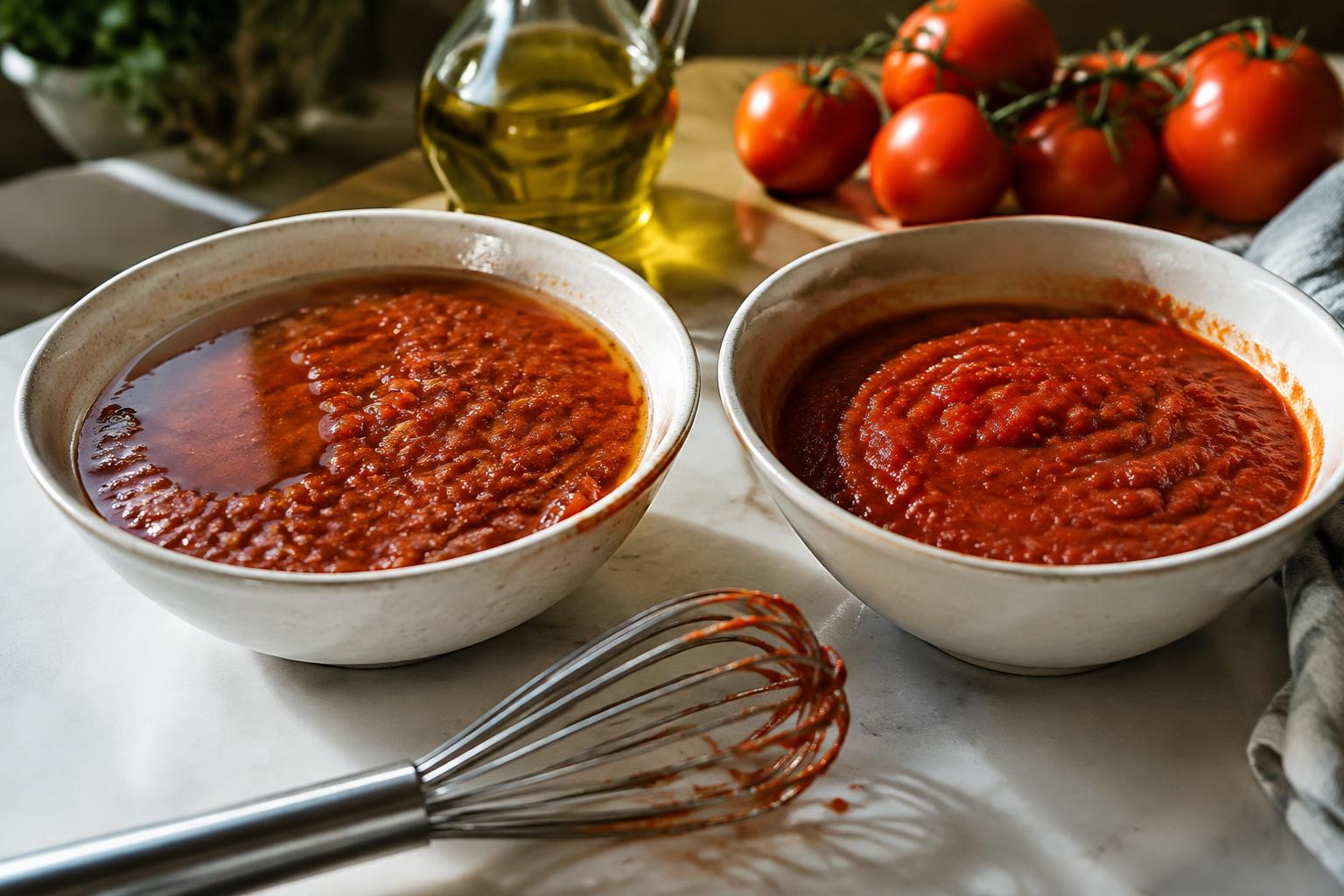
A sauce that looks glossy in the pan can leave a watery ring on your plate after resting. That separation often comes from water released by ingredients or an unstable emulsion, not simply from poor cooking. Knowing how heat, salt, and mixing affect ingredients such as tomatoes, yogurt, and butter helps you pinpoint why the texture changes.
Key Takeaways:
- Watery sauce often comes from separated oil and water, moisture released by vegetables, or starch settling after the sauce sits. Tomato sauces, vinaigrettes, and cream sauces each separate for different reasons.
- Build a stable emulsion by whisking oil into the liquid gradually, or use an immersion blender for a smoother blend. For starch-thickened sauces, stir in a slurry of cornstarch and cold water, then simmer until it thickens.
- Cool sauces promptly and store them in airtight containers. Before serving, whisk or reheat gently; avoid boiling cream sauces, which can break into watery liquid and fat.
Why Homemade Sauces Turn Watery
A sauce’s texture depends on how its ingredients hold water and how well its liquid and fat remain combined. Chopping, blending, and heating change those structures, while resting gives moisture time to migrate or separate. The result is often a thin layer around an otherwise thick sauce, rather than a uniform change throughout. In a tomato salsa, for example, liquid pooling beneath chopped vegetables reflects released moisture, while an oily sheen points to a different kind of separation.
Water released by vegetables, fruit, and other ingredients
Cut produce leaks water as its cells are damaged, and salt draws out more moisture through osmosis. Cucumbers, tomatoes, berries, and cooked spinach are especially noticeable sources because their flesh contains abundant water. In a blended sauce, that liquid disperses at first, then collects as the pieces soften and settle. Ingredients such as yogurt or tofu also release moisture when their structure is disturbed, leaving free liquid around the thicker solids.
Emulsions breaking and liquids separating
Mayonnaise, vinaigrette, and creamy pan sauces rely on tiny droplets of fat dispersed through water. If those droplets merge, the emulsion breaks and the components separate into a thin watery layer and visible oil. Egg yolk and mustard contain compounds that help stabilize droplets, but an emulsion’s structure can still weaken during mixing or after it stands. A split hollandaise, for instance, often shows butterfat pooling beside its thinner liquid base.
The effects of time, temperature, and storage
As a sauce rests, gravity moves heavier particles downward while liquid rises or pools between them. Cooling thickens some fats, but it can also cause water to seep from gels, starches, or dairy mixtures; reheating may then loosen the texture further. Temperature shifts are especially apparent in refrigerated pesto, whose oil firms while moisture gathers underneath. During storage, settling and seepage continue inside the container, particularly when chopped ingredients remain suspended in a thin dressing.
- Oil-based dressings separate into distinct layers.
- Pureed sauces often show sediment at the bottom.
- Dairy sauces can develop watery beads on the surface.
Factors That Make Sauce Separation More Likely
Your sauce is more prone to separating when its ingredients hold water and fat unevenly or its structure is disrupted by heat and handling. A dairy base, a watery vegetable purée, and oil each behave differently, so their proportions and preparation affect the finished texture. Small formulation changes, such as adding extra broth or using a low-fat substitute, can leave free liquid in the bowl. The conditions below make that outcome more likely.
Ingredient proportions and excess moisture
Extra liquid from tomatoes, cucumbers, thawed vegetables, or undrained beans can exceed what your sauce’s fat, starch, or protein can hold. A vinaigrette with a generous pour of oil and too little mustard, for example, separates sooner because the droplets are less well dispersed. Low-fat yogurt or milk also provides less fat to support a creamy texture. Unmeasured additions of broth, juice, or cooking water can leave a visible pool beneath the sauce.
Acidity, salt, and thickener choices
Lemon juice and vinegar add acidity, which can cause milk proteins to clump, especially in a warm sauce. Salt draws moisture from ingredients such as chopped cucumber and herbs, so a salted mixture can become thinner as it sits. Starch also affects stability: too little leaves a sauce loose, while flour or cornstarch that has not been fully dispersed can form lumps rather than thicken evenly. Acid near dairy and undissolved starch are common causes of a grainy or watery finish.
Mixing, cooking, cooling, and reheating
A whisk or immersion blender breaks fat into smaller droplets, but a brief stir may leave oil loosely suspended in a thin dressing. Excessive heat can tighten egg or dairy proteins and push out liquid, while a rapid boil can destabilize a cheese sauce. During cooling, steam condenses on a lid and drips back into the mixture; reheating at high power can further separate butter or cream. Repeated temperature swings are especially hard on emulsified sauces.
| Factor | Typical example | Likely effect |
|---|---|---|
| Excess moisture | Thawed vegetables added undrained | Free liquid collects |
| Acidity | Lemon juice in warm dairy | Proteins may clump |
| Thickener | Undispersed cornstarch | Lumps and uneven body |
| Heat handling | Cheese sauce brought to a boil | Fat and liquid separate |
How to Prevent Homemade Sauces from Turning Watery
Build stability into the recipe before ingredients meet the pan: control excess water, use enough emulsifying or thickening ingredients, and bring components together at a measured pace. A mayonnaise-based dressing, for instance, needs oil incorporated gradually, while a tomato sauce benefits from steady simmering that lets excess liquid evaporate. Consistent proportions matter as much as technique, so measure liquids and fats rather than adding them freely, especially when adapting a recipe or substituting ingredients.
How to prepare and drain moisture-rich ingredients
Watery vegetables release liquid after chopping, so salt sliced cucumbers or grated zucchini, let them stand in a sieve, then press or pat them dry before adding them to a sauce. Thaw frozen spinach completely and squeeze it firmly in a clean kitchen towel; drain canned tomatoes in a fine-mesh strainer if their packing liquid would thin the recipe. For herbs, wash them ahead and dry thoroughly in a salad spinner. Remove surface moisture before mixing.
How to balance liquids, fats, and thickeners
Measure acidic liquids such as vinegar, citrus juice, or wine before adding them, since extra acidity can destabilize some dairy-based sauces. For a stable vinaigrette, whisk a small amount of mustard into the vinegar before streaming in oil; for a cooked sauce, use a little flour or cornstarch slurry in the proportion specified by your recipe. Add liquid gradually, stopping when the sauce reaches the intended consistency rather than pouring in the full amount automatically.
Tips for mixing, cooking, cooling, and storing
Bring ingredients to similar temperatures before combining, particularly for cream cheese, yogurt, or mayonnaise-based sauces. Whisk steadily as you add oil or warm liquid, and keep cooked sauces at a gentle simmer rather than a hard boil, which can break delicate emulsions. Cool sauces in a shallow container, then seal them once chilled and store them in the refrigerator. Use an airtight container to limit condensation, and keep watery garnishes separate until serving.
- Use a clean, dry bowl and whisk.
- Choose full-fat dairy when the recipe calls for it.
- Keep fresh fruit pieces separate until serving.
How to Fix a Sauce That Has Separated
Once oil or liquid pools on the surface, first judge whether the sauce is still warm and what texture you need. A vinaigrette, mayonnaise, and pan sauce respond to different repairs, so match the method to the ingredients rather than adding liquid at random. Work in small stages and stop as soon as the mixture looks uniform; excessive heat or extra liquid can weaken the texture further. The table summarizes practical options for common sauces.
| Sauce | Repair method | Useful addition |
|---|---|---|
| Vinaigrette | Whisk vigorously | Mustard |
| Mayonnaise | Blend into a fresh yolk | Egg yolk |
| Pan sauce | Whisk off heat | Cold butter |
Recombine the sauce with gentle whisking or blending
For a vinaigrette or pan sauce, whisk steadily in a clean bowl, drawing the separated liquid into the oil a little at a time. If whisking leaves visible droplets, use an immersion blender in a narrow container and pulse briefly; prolonged blending can warm delicate mixtures. For broken mayonnaise, place a fresh egg yolk in a bowl, then slowly whisk the separated mayonnaise into it. Keep the sauce cool and stop when it turns glossy and cohesive.
Adjust thickness with a suitable thickener
When re-emulsifying alone does not restore body, choose a thickener suited to the sauce. Stir a small spoonful of cornstarch with cold water, whisk it into a simmering gravy or pan sauce, and cook until the mixture thickens. For a cold dressing, blend in a little Dijon mustard or mayonnaise rather than starch. Add thickener in small increments, since excess cornstarch can make hot sauces pasty and mute their flavor.
To wrap up
Wateriness usually comes from ingredients releasing liquid, an emulsion breaking, or a sauce being stored before it has cooled properly. You can limit separation by draining watery produce, measuring liquid carefully, blending oil into emulsified sauces gradually, and chilling finished batches in sealed containers. If liquid collects on top, whisk or blend the sauce again, or adjust its consistency with an appropriate thickener. For a tomato sauce, simmer off excess moisture; for mayonnaise, rebuild the emulsion with a fresh egg yolk.
FAQ
Why does my homemade sauce turn watery in the fridge?
A homemade sauce can turn watery in the fridge when ingredients release moisture or an emulsion separates as it cools. Vegetables and fruit may shed liquid over time, while sauces made with oil, dairy, or other emulsified ingredients can split if their balance or handling makes them unstable.
How long should I drain vegetables before adding them to sauce?
Drain moisture-rich vegetables until they stop dripping freely, then pat them dry if needed. The time depends on the vegetable and how it was cut or cooked, so use its texture and visible moisture rather than a fixed number of minutes.
Can I save a watery sauce without adding flour?
Yes, whisk or blend the sauce gently to bring separated ingredients back together, or simmer it briefly to reduce excess liquid. If it remains thin, a small amount of a suitable thickener can help, but the best choice depends on the sauce and may change its texture.
Does freezing make homemade sauces separate when they thaw?
Freezing can cause some sauces to separate because water and fat may behave differently as the sauce freezes and thaws. Sauces with dairy or delicate emulsions are more prone to texture changes, and gentle reheating with whisking may help restore a smoother consistency.
What is the most common mistake that makes a sauce separate?
A common mistake is adding too much liquid or failing to remove moisture from ingredients before mixing them into the sauce. Separation can also result from overheating or rough reheating, especially in emulsified sauces, so use gentle heat and add liquid gradually.