
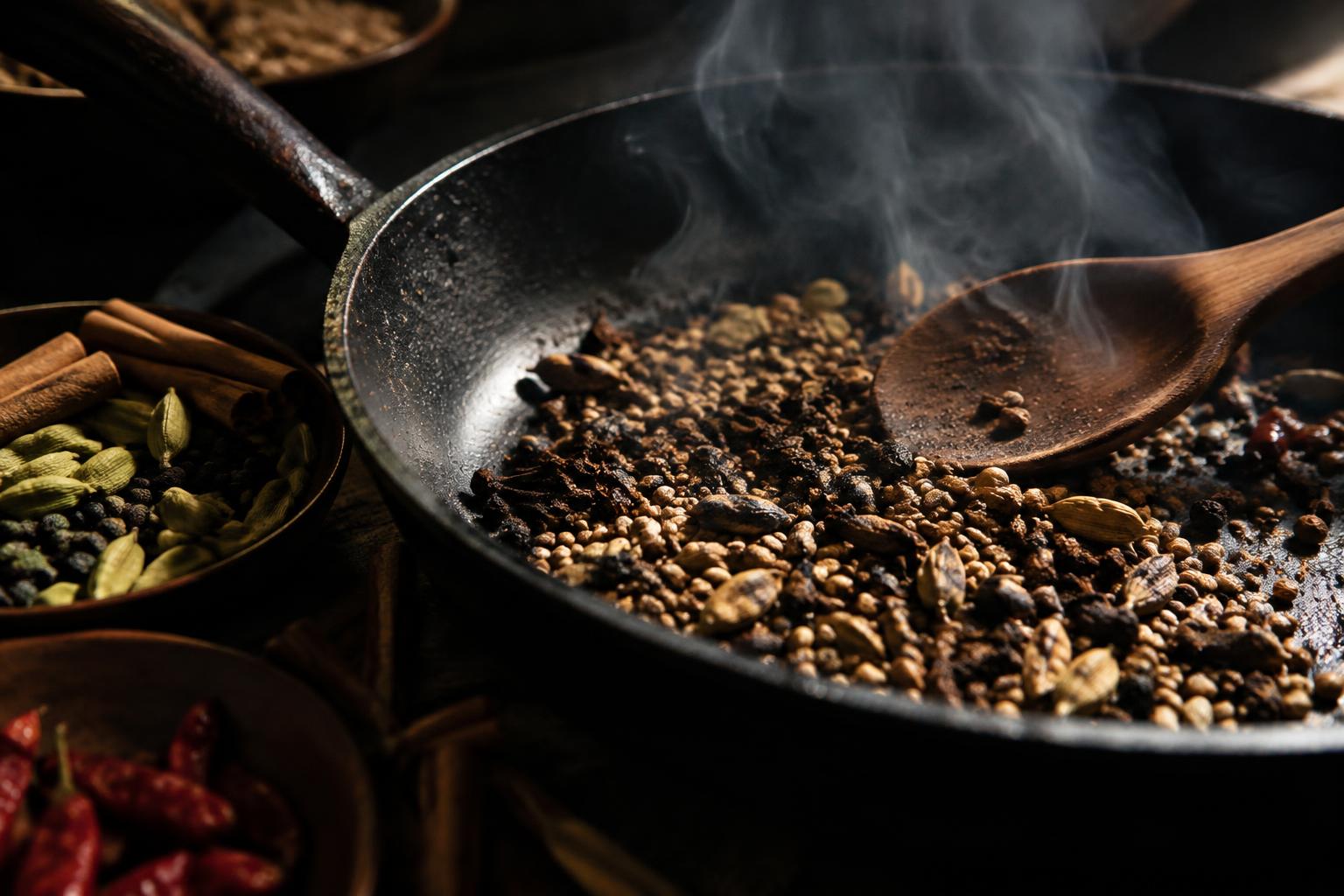
A warm, fragrant spice can turn harsh in moments when a hot pan scorches its delicate oils. If your cumin, paprika, or ground coriander tastes acrid after cooking, excessive heat is often the culprit, especially when the spice hits dry oil or a bare skillet. Gentle heat and brief blooming preserve the aroma without the burnt bitterness.
Key Takeaways:
- Spices taste bitter when their delicate oils and flavor compounds scorch, often from excessive heat, a dry pan, or prolonged cooking.
- Toast whole spices briefly in a dry skillet over medium or medium-low heat, stirring until fragrant, then transfer them out of the hot pan to stop cooking.
- Add ground spices to oil or cooking liquid for only a short time before adding other ingredients; for long-simmered dishes, stir them in with enough liquid to prevent scorching.
Why Spices Turn Bitter During Cooking
As spices heat in a pan or pot, their aromatic oils and other flavor compounds change at different rates. Gentle cooking can soften sharp notes and bring out fragrance, but excessive heat pushes those compounds toward harsh, bitter flavors. The shift depends on the spice and how long it stays hot, yet high heat accelerates flavor breakdown. A dry skillet, a thin layer of oil, or a pot left unattended can expose spices to damaging temperatures.
How Heat Alters Spice Flavor
Heat releases volatile aromatic compounds from spices, but prolonged or intense exposure alters them and drives off delicate aromas. In ground cumin, for instance, brief warming brings out a toasted scent, while extended frying can leave a scorched, acrid taste. Oil also transfers heat quickly, so spices added to shimmering oil need close attention. Fragrance fading is an early warning: once a spice smells burnt rather than aromatic, its flavor has already shifted.
How Overcooking Releases Bitter Compounds
As spice particles overcook, their natural compounds break down, and browned or charred material adds harsh notes to the dish. Fine powders are especially vulnerable because their small particles heat rapidly and settle against the pan’s hottest surface. A burnt patch of paprika or turmeric can spread bitterness through a whole pot after stirring. Blackened specks signal scorching, while smoke from the pan indicates that the spice or its surrounding oil has overheated.
- Use a heavy-bottomed pan to reduce hot spots.
- Keep a wooden spoon ready to stir spices promptly.
- Move the pan off the burner if smoke appears.
Choosing Spices and Preparing Them Well
Bitterness risk starts with the spice itself: age, particle size, and natural flavor compounds all shape how readily a seasoning tastes harsh. Freshness and grind matter because stale aromatics lose their brighter notes, while finely ground spices expose more surface area than whole seeds. Your choice of spice also counts; fenugreek and some varieties of turmeric have pronounced bitter notes, unlike sweeter spices such as cinnamon.
Factors That Influence Bitterness
Whole spices generally retain their aroma longer than pre-ground versions, and freshly ground cumin or coriander often tastes rounder than an old jar. Fine powders release flavor quickly because more of each particle is exposed, so their taste can seem concentrated. Stale ground spices often lose fragrance first, leaving earthy or dusty notes more noticeable. Fenugreek, turmeric, and some chili powders have naturally sharper or more bitter flavors than cardamom or sweet paprika.
How to Store and Prepare Spices
Store spices in tightly sealed containers away from heat, light, and moisture, such as in a closed cupboard rather than beside the stove. Keep whole seeds intact until needed, then use a clean spice grinder or mortar and pestle to release their aroma. Grind only what you need, since freshly ground spices lose fragrance faster than whole ones. Label containers with purchase dates, and discard spices that smell faint or musty.
| Spice form or type | Bitterness consideration |
|---|---|
| Whole seeds | Retain aroma longer in storage |
| Fine powder | Releases flavor quickly |
| Fenugreek | Has a distinctly bitter profile |
| Cardamom | Offers a sweeter, aromatic flavor |
How to Toast Spices Without Burning Them
Control comes from matching heat to the spice’s form and keeping it moving. Use a heavy pan for steadier warmth, and stay close: spices can pass from fragrant to scorched in moments, especially over high heat. Look for a change in aroma and, with whole seeds, a slight deepening of color rather than waiting for smoke. Gentle heat and prompt removal from the pan protect delicate oils from turning harsh.
Tips for Dry-Toasting Whole Spices
Start with a clean, dry skillet over medium-low heat, then add whole spices in a single layer so they toast evenly. Shake the pan or stir with a wooden spoon every few seconds; cumin seeds, coriander seeds, and peppercorns release aroma at different rates, so use smell and appearance rather than a fixed timer. Once fragrant, transfer them off the hot pan immediately, since residual heat can keep darkening the seeds.
Tips for Blooming Ground Spices in Oil
Warm oil over low to medium-low heat before adding ground spices, and stir continuously to keep the fine particles from settling against the pan. A small splash of water or broth can lower the mixture’s temperature if it begins to sizzle aggressively. Stop as soon as the spices smell rounded and aromatic; smoke or black flecks signal scorching, while a brief bloom usually takes only seconds.
- Use a pale skillet when learning to toast, so color changes are easier to see.
- Toast one spice at a time when their sizes differ widely.
- Keep a cool plate beside the stove for quickly emptied spices.
How to Add Spices at the Right Time
Timing depends on how a spice releases its flavor and how long it will cook. Whole spices often need early contact with warm oil to infuse it, while delicate ground spices lose aroma during prolonged heat. Add each spice at the stage that suits its form and the recipe’s cooking method, keeping the pan at a controlled temperature. A brief bloom in oil or a later addition to simmering liquid protects volatile aromas from excessive heat.
Match Spice Timing to the Recipe
For a curry or stew, add sturdy whole spices such as cumin seeds to warm oil near the start, then stir ground spices in briefly before adding liquid. In a quick sauté, add ground paprika or coriander after the vegetables soften, so the powder does not sit against hot metal. For soups with long simmering times, reserve a portion of delicate ground spices until near the end. Recipe timing determines how long each spice stays exposed to heat.
Adjust Heat, Liquid, and Cooking Time
Keep the burner at medium or lower while blooming ground spices, stirring constantly with a wooden spoon or heatproof spatula. Add them to oil only for a short interval, then introduce broth, tomatoes, coconut milk, or another liquid to lower the pan’s temperature. In dry preparations, reduce the heat before adding powdered spices and shorten their contact with the pan. Direct, sustained heat can scorch fine powders before their aroma has dispersed.
| Recipe situation | When to add spices | Heat or liquid cue |
|---|---|---|
| Stew or curry | Whole spices early, ground spices briefly before liquid | Bloom over controlled heat, then add liquid |
| Quick sauté | Ground spices after vegetables soften | Lower heat and stir continuously |
| Long-simmered soup | Add delicate ground spices near the end | Stir into simmering broth |
How to Fix a Dish That Tastes Bitter
Once bitterness dominates, make small adjustments and taste after each one; a large correction can flatten the dish or push it out of balance. First identify whether the sauce, broth, or whole pot carries the harsh flavor, then work in a separate spoonful or small portion before changing the full batch. Keep the original seasoning in view, since salt, heat, and acidity can all seem sharper after you add a balancing ingredient.
Balance Bitterness with Acidity, Fat, or Sweetness
Lemon juice or mild vinegar can brighten a bitter sauce, while cream, yogurt, coconut milk, or a knob of butter softens its edges. Add acidity in drops and fat by spoonfuls, tasting between additions so the dish does not turn sour or greasy. A pinch of sugar or a little honey can round out bitterness in tomato-based sauces and braises, but sweetness should stay subtle rather than making the dish taste sugary.
Dilute or Rebalance the Dish
For an overly bitter soup, stew, or curry, stir in unsalted stock, water, cream, or more of the main ingredients to spread the concentrated flavor across a larger volume. If only the bottom of the pot tastes scorched, transfer the unburned food to a clean pan without scraping up the dark layer. Then adjust salt and other seasonings carefully, since dilution reduces their intensity too.
- Use a clean spoon for each tasting.
- Keep the pot off the heat while adjusting.
- Add unsalted liquid before correcting salt.
Tips for Preventing Bitter Spices Next Time
Build a repeatable routine around heat, timing, and tasting rather than relying on color alone. Keep your pan at a controlled temperature, add spices when the recipe calls for them, and taste after each addition has had time to blend into the food. Small, deliberate adjustments make it easier to catch bitterness early, before it spreads through a whole pot of lentils, sauce, or stew.
Taste as You Cook
Use a clean spoon to taste the dish after spices have simmered briefly, then assess whether their flavor is warming, sharp, or acrid. Let a spoonful cool slightly first, since very hot food can hide subtle flavors. If bitterness appears, stop adding spices and lower the heat; an acrid edge is a warning that the flavor is becoming dominant. Taste again after the next cooking step, such as adding broth or tomatoes.
Use Small Amounts and Adjust Gradually
Measure spices before they reach the pan, then add less than the full amount if you are unsure how potent they are. Stir thoroughly and give the mixture time to release its flavor before adding more. For ground cumin in a pot of beans, begin with a modest portion, taste after it simmers, and increase in small pinches. Whole spices intensify more slowly, so track their steeping time as well as their quantity.
| Step | What to do | What to watch for |
|---|---|---|
| Control heat | Keep the pan at a steady, moderate temperature | Smoke or rapidly darkening spices |
| Taste | Use a clean spoon after spices simmer briefly | A sharp, acrid edge |
| Adjust | Add measured pinches, then stir and taste again | Flavor becoming dominant |
| Track whole spices | Note how long they steep in the dish | Flavor growing stronger over time |
Summing up
Bitter spices usually signal excessive heat, prolonged cooking, or old, poorly stored ingredients rather than a need for more seasoning. Keep whole spices moving in a dry pan, toast them only until fragrant, and use a lower flame for ground spices, which scorch quickly. Add delicate powders later in cooking, or bloom them briefly in oil before adding liquid. If bitterness has already developed, balance the dish with acidity or sweetness, then serve it with the spice mixture evenly distributed.
FAQ
Why do some spices taste bitter after cooking?
Spices can taste bitter after cooking when high heat or prolonged cooking scorches their aromatic compounds. Ground spices burn faster than whole spices, so use lower heat and shorten their time in hot oil, especially in a dry pan.
How can I tell if spices are burning in a pan?
Burning spices often smell harsh or acrid and may darken quickly, rather than giving off a warm, fragrant aroma. If you notice those signs, remove the pan from the heat; adding liquid may stop further cooking, but it will not undo scorched flavors.
Can I use whole spices instead of ground spices to avoid bitterness?
Whole spices are generally less likely to burn quickly than ground spices because less surface area is exposed to heat. They still need watching, and they may take longer to release flavor; crush or grind them when a recipe needs more immediate, even seasoning.
Can you fix a dish if the spices taste bitter after cooking?
You can often make mild bitterness less noticeable by adding a little acid, fat, sweetness, or more of the dish’s other ingredients. Add changes gradually and taste as you go; if the spices are badly scorched, balancing can soften the taste but may not remove it.
Does fresh spice cost more, and is it worth replacing old spices?
Fresh spices often have a stronger aroma, so replacing stale ones can improve flavor without increasing the amount used. Whether replacement is worth the cost depends on how often you cook with that spice; check its aroma and taste, and replace it if it seems weak or musty.