
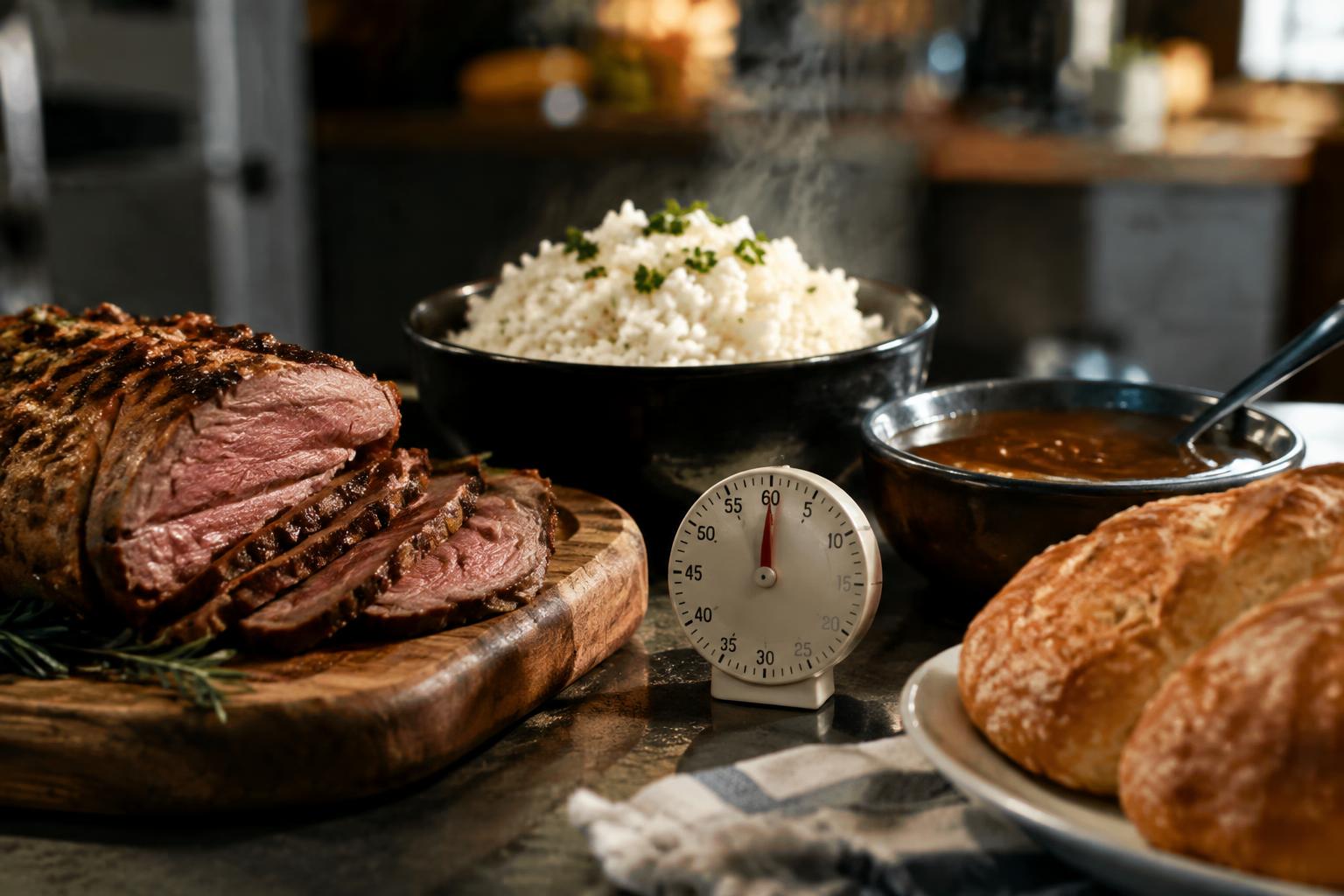
Resting is not just for roast meat: it gives heat, moisture, and structure time to settle in many foods. After cooking, steamed rice finishes absorbing moisture, while a cake’s crumb firms as it cools. A brief pause can also smooth a pan sauce, changing its texture before it reaches your plate.
Key Takeaways:
- Resting gives moisture and heat time to redistribute. Rice firms up as steam finishes cooking the grains, while a baked cake’s crumb sets as it cools.
- Time and method depend on the food. Keep cooked rice covered off the heat, cool baked goods on a wire rack, and let a pan sauce stand briefly before serving.
- Skipping the rest can affect texture and consistency: freshly cooked rice may be sticky, warm cake can crumble when sliced, and a sauce straight from the pan may still be uneven.
Why Resting Time Changes Food
Once cooking stops, food is still adjusting: heat continues to move, moisture shifts between wetter and drier areas, and ingredients settle into a more stable form. Resting gives these changes room to occur without additional heat or handling. The result is not simply a cooler dish, but one with a more even temperature and a more coherent texture. In rice, baked goods, and sauces, heat, moisture, and structure interact in distinct ways.
Carryover cooking and temperature changes
After you remove a pan from the burner or a dish from the oven, stored heat keeps moving from hotter surfaces toward cooler centers. That carryover cooking can finish grains, soften vegetables, or thicken a sauce as its temperature falls. The change is usually less dramatic than active cooking, but it matters: a pot of rice continues steaming under its lid, while a custard’s center firms as residual heat spreads through the dish.
Moisture redistribution and structural stability
As food rests, moisture moves through its structure rather than remaining concentrated at the surface or in one pocket. Rice grains absorb lingering steam, while a loaf’s crumb settles as internal moisture redistributes and escaping vapor decreases. Sauces also become more consistent as suspended fat and liquid stabilize after vigorous heating or whisking. This structural settling reduces uneven textures, such as wet patches in rice or a fragile, compressed slice of cake.
| Food | Change during rest | Structural effect |
|---|---|---|
| Rice | Steam spreads among grains | More even, distinct texture |
| Baked goods | Moisture redistributes through the crumb | Cleaner slices and a settled interior |
| Sauces | Heat falls and components stabilize | More uniform consistency |
How Long to Rest Different Foods
Choose a resting interval according to each food’s size, structure, and retained heat. A shallow pan of grains loses heat faster than a deep pot, while a large loaf cools more slowly than individual rolls. Use the vessel and portion as practical guides, then rely on cues such as steam, firmness, or sauce consistency. There is no single timer that fits every batch, so note the conditions alongside the resting time.
Short rests for rice and grains
For rice, keep the lid on after cooking and let the pot stand briefly before fluffing with a fork or rice paddle. A compact pot of white rice generally needs only a few minutes, while dense grains such as brown rice benefit from a slightly longer covered rest. Keep the lid closed to retain steam, and avoid stirring during the interval; the grains settle in the pot before serving.
Cooling periods for baked goods
Freshly baked goods need time to release heat, with the interval shaped by their size and pan. Set muffins and cookies on a rack once they hold their shape, while a loaf or cake should cool longer before slicing or frosting. Follow the recipe’s pan guidance for the initial cooling stage, since a cake left too long in its tin can become difficult to turn out cleanly.
Resting intervals for sauces and cooked meat
Sauces often need only a short pause off the heat, especially after reduction or thickening, so their temperature and texture can settle before plating. Cooked meat requires a longer rest that reflects the cut’s thickness; a thin chop rests less than a large roast. Use a clean cutting board and allow juices to redistribute before slicing, keeping the meat covered loosely rather than sealed in foil.
- Set a timer when several dishes finish cooking at once.
- Place a cooling rack away from drafts.
- Use a warm serving dish for food that needs to stay hot.
Better Results Beyond Meat
Resting matters in dishes where heat and moisture continue to move after cooking stops. In a covered pot, a cooling loaf, or a pan of reduced sauce, a short pause lets ingredients settle into a more even structure. You notice the difference in texture and consistency, as well as in how clearly seasonings come through. These changes are especially useful when you want rice that holds its shape, baked goods that slice neatly, or sauce with a rounded finish.
Rice: setting grains and balancing moisture
Once rice leaves the heat, steam trapped beneath the lid continues to soften the grains while excess moisture redistributes through the pot. A brief covered rest gives the starch time to set, so your rice is less likely to turn gummy when fluffed. The grains also absorb seasoning more evenly, producing a balanced, tender texture rather than a wet surface and firm center. Long-grain rice, for example, separates more cleanly after steaming off the burner.
Baked goods: stabilizing the crumb and preventing crumbling
Fresh from the oven, a cake or quick bread has a delicate structure, and its crumb firms as it cools. Slicing too early releases steam and compresses the interior, leaving you with ragged pieces or a damp knife. Allowing the bake to settle produces cleaner slices and distributes moisture more evenly across the crumb. In a loaf of banana bread, cooling before cutting keeps the center intact instead of breaking into soft fragments.
Sauces: smoothing texture and bringing flavors together
After you remove a sauce from the heat, its ingredients continue to mingle as the temperature falls. Butter emulsions become more cohesive, while herbs, spices, and aromatics have time to infuse the liquid. A short pause can soften sharp notes and create a more unified flavor without further reduction. For a pan sauce, resting briefly before serving also lets suspended butter settle into a glossy finish rather than separating on the plate.
| Food | What changes during rest | Result |
|---|---|---|
| Rice | Steam redistributes and starch sets | More distinct, tender grains |
| Baked goods | Crumb firms as heat and moisture settle | Cleaner slices with less crumbling |
| Sauces | Flavors meld and emulsions stabilize | Smoother texture and rounded taste |
Practical Resting Methods
Set a resting place before cooking ends so each dish has a stable surface and a clear serving time. A warm, draft-free counter suits many cooked foods, while a rack keeps baked goods from trapping steam against a solid surface. Use a timer when other preparation competes for attention, and match the hold to the food’s size and composition. Controlled timing and suitable covering preserve texture, moisture, and serving temperature.
Choosing whether to cover or uncover
For rice, place the lid on the pot during its brief rest so steam redistributes through the grains without escaping. Sauces and soups benefit from a loose lid that limits surface cooling while allowing some steam to vent. Leave bread, pastry, and roasted items uncovered on a rack; trapped vapor softens crisp crusts. Loose covering suits moist dishes, while an open rack preserves the dry exterior of a loaf.
Accounting for dish size, ingredients, and room temperature
Large, deep dishes retain heat longer than shallow portions, so a casserole needs a longer pause than a small bowl of rice. Dense ingredients, such as root vegetables, also hold warmth after the cooking vessel leaves the heat. In a cool kitchen, food loses temperature faster than it does in a warm one. Dish depth and room temperature should guide your timing, particularly for a deep ceramic baking dish.
Serving and reheating after resting
Serve rested rice promptly, fluffing it with a fork just before it reaches the table. Spoon a rested sauce into a warm serving vessel, or return it to low heat and stir until evenly hot. For baked goods, wait until the crumb has set before slicing, then rewarm bread briefly in an oven rather than a microwave to retain its crust. Reheat gently, and avoid leaving perishable food at room temperature for extended periods.
- Use a wire rack beneath cooling bread.
- Choose a lid that fits the pot closely.
- Warm serving bowls with hot water, then dry them.
Common Resting Mistakes
Resting works within limits: stopping too soon leaves food unstable, while waiting too long can damage texture or create a food-safety risk. Your kitchen conditions, serving schedule, and the food’s ingredients all affect the useful window. A covered dish retains heat and moisture differently from an uncovered one, and a warm room changes how quickly perishable food cools. Avoid treating one resting time as a rule for every dish; texture and safe temperature both depend on what you are resting and where.
| Food | Too short | Too long |
|---|---|---|
| Cooked rice | Loose, wet grains | Drying or cooling at room temperature |
| Baked goods | Fragile crumb or gummy center | Stale or dried-out texture |
| Sauces | Unsettled consistency | Skin formation or excessive cooling |
| Perishable dishes | Insufficient settling | Unsafe time in the temperature danger zone |
Serving rice and baked goods before they set
Cutting into a loaf straight from the oven compresses its soft crumb, while serving rice before steam has finished redistributing leaves some grains wet and others firm. Give bread time on a wire rack so moisture can escape without softening the crust; keep cooked rice covered briefly so the grains settle without drying out. A knife drawn through a warm, unset loaf often leaves a gummy streak, and freshly fluffed rice can break under a serving spoon.
Letting sauces form a skin or cool excessively
Leaving béchamel, custard sauce, or gravy uncovered exposes the surface to air, where evaporation forms a skin that breaks into lumps when stirred back in. Pressing food-safe wrap directly onto a sauce’s surface limits that contact during a short hold. Long cooling also thickens starch-based sauces and can make butter or cream sauces separate as they lose heat. A cooled béchamel often needs gentle reheating and whisking to regain a smooth texture.
Leaving perishable foods at unsafe temperatures
Rice, dairy-based sauces, custards, and other perishable foods should not sit at room temperature for an extended rest. Bacteria can multiply in the temperature danger zone, and cooked rice deserves particular care because spores can survive cooking and produce toxins if the rice is mishandled. Keep hot food hot for serving, or transfer leftovers promptly into shallow containers for refrigeration. A deep pot of rice cools slowly at its center, even after the surface feels cool.
Conclusion
Resting is a finishing step, not lost time: it lets rice absorb residual moisture, gives baked goods time to set, and allows sauces to thicken as they cool. When you follow the recipe’s rest period, you get more consistent texture and cleaner portions, whether you are fluffing rice after steaming or waiting before slicing a loaf. Apply the same patience beyond meat, and judge readiness by the food’s structure, such as a set crumb or a sauce that coats the back of a spoon.
FAQ
Is resting time worth it for rice, baked goods, and sauces?
Yes, resting can improve texture and consistency without adding ingredients or equipment. The benefit depends on the food: rice grains settle, baked goods firm up, and sauces can become more uniform as they stand.
How long should I let rice, baked goods, and sauces rest?
Resting time depends on the food’s size, ingredients, and temperature, so there is no single timing that fits all dishes. Let rice stand briefly after cooking, cool baked goods until they hold their shape, and rest sauces only as long as needed before serving.
Does food need to be covered while it rests?
Covering food helps retain warmth and moisture, while leaving it uncovered allows steam to escape and can prevent a surface from becoming soggy. Choose based on the result you want, and avoid covering baked goods if trapped steam would soften their crust.
Can resting food too long make it unsafe to eat?
Yes, perishable cooked foods can become unsafe if left at room temperature for too long. Rest food only as needed, then serve it or refrigerate it promptly, following food safety guidance for storage and reheating.
What should I do if I do not have time to let food rest?
Serve it sooner if necessary, but expect less stable texture in foods such as rice and baked goods. For baked goods, allow at least enough cooling to handle them safely; for sauces, gentle stirring can help smooth them before serving.