
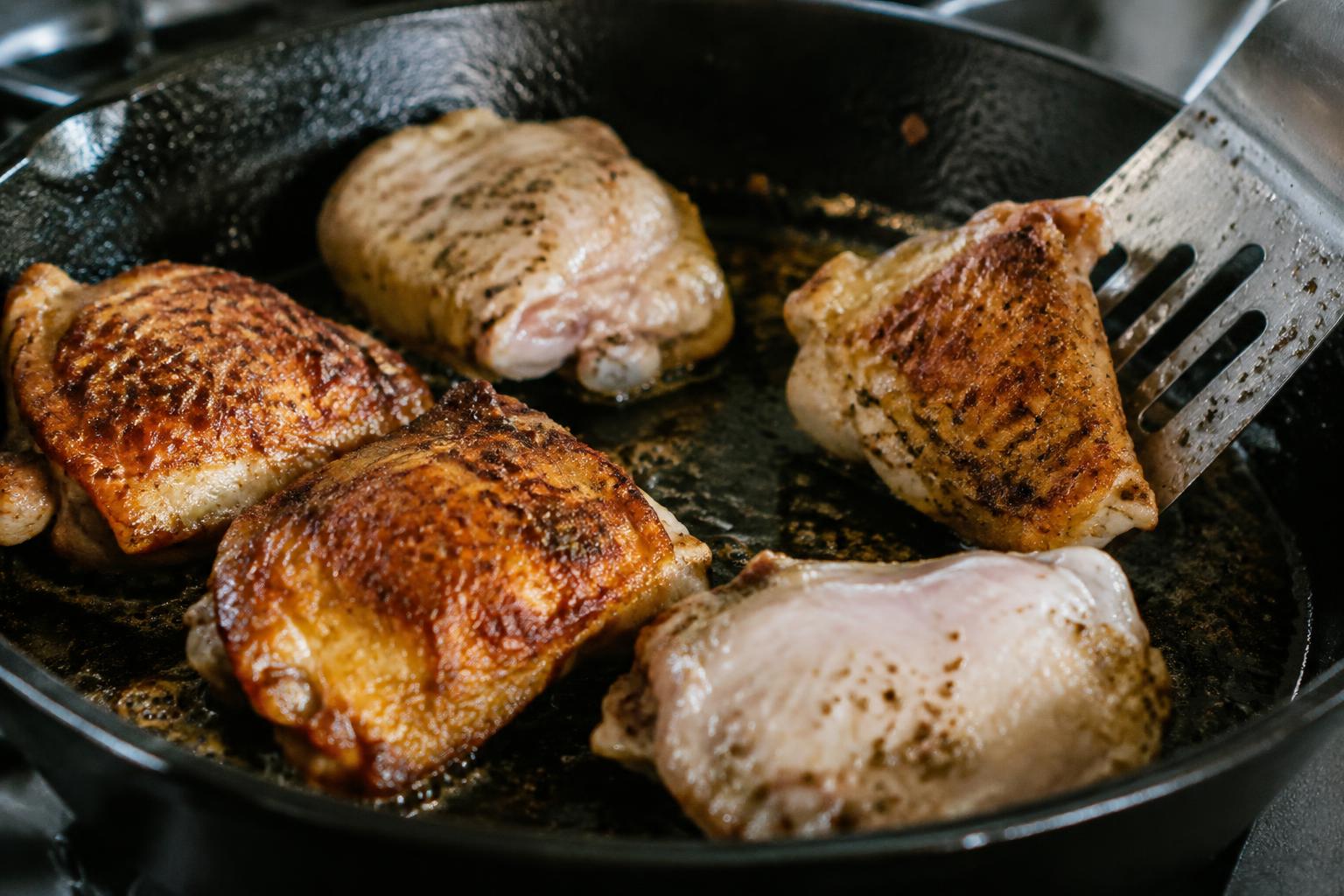
Two slices of potato can sit side by side yet emerge with different crusts because pan heat is rarely uniform. Burner position, uneven contact, crowded ingredients, and surface moisture all affect how quickly food browns. When you spot pale patches beside dark edges, the cause is usually local heat or moisture, not a mysterious flaw in the recipe.
Key Takeaways:
- Uneven browning often starts with uneven pan contact: a warped skillet, crowded ingredients, or food cut into different sizes leaves some surfaces hotter than others.
- Surface moisture slows browning. Pat vegetables or meat dry, cook in uncrowded batches, and let wet ingredients release steam before expecting a deep sear.
- Match the adjustment to the cause: preheat a heavy pan evenly, spread food into a single layer, and rotate pieces or move them between hotter and cooler spots as they cook.
How Pan Contact and Heat Create Uneven Browning
Color develops where food transfers heat efficiently to the cooking surface, so pieces in the same skillet can finish with different shades. A slice lying flat receives stronger, steadier contact than one resting on a curved edge, while a burner’s heating pattern can leave one area hotter than another. Watch for patchy golden surfaces and use the pan’s layout to identify whether contact or heat is driving the contrast.
Direct contact with the pan
Food browns most readily at the points pressed against the pan, where conductive heat moves directly into its surface. A broad, flat cutlet develops an even crust when it lies fully against the metal; curled edges or unevenly cut pieces produce pale gaps beside darker contact marks. Set each piece down flat and avoid crowding, which can prevent pieces from settling into full pan contact. A spatula can gently press a lifted edge into place.
Hot spots and uneven heat distribution
Burner flames and electric elements do not always heat a pan uniformly, especially when the cookware base is thin or wider than the burner. A steak positioned over the hottest zone may brown faster than one near the rim, even when both touch the surface equally. Rotate the pan or swap food positions when you see uneven color by location; a cast-iron skillet also retains heat differently across its base than a thin aluminum pan.
| Cause | What you see | Useful adjustment |
|---|---|---|
| Partial surface contact | Pale patches beside dark marks | Flatten lifted edges with a spatula |
| Burner hot spot | Faster browning on one side | Rotate the pan or reposition pieces |
| Thin or oversized pan base | Uneven color across the cooking surface | Match pan size to the burner |
How Moisture and Food Preparation Affect Browning
Uneven color often starts before food reaches the pan: water, inconsistent pieces, and crowded batches change how quickly each surface heats. Wet spots stay pale while drier areas brown, and pieces with different thicknesses finish at different rates. Preparation shapes the contact between food and hot metal, so a few practical adjustments, from patting vegetables dry to cooking in smaller batches, can produce more even color across a skillet.
Surface moisture and drying
Water on food must evaporate before its surface can brown, leaving damp areas pale while exposed patches darken. Pat sliced mushrooms or chicken dry with a clean towel, and drain rinsed beans thoroughly before adding them to a hot skillet. Dry surfaces brown sooner; excess water also collects as steam when wet food goes into the pan. For vegetables washed just before cooking, spread them on a towel until their surfaces are no longer visibly wet.
Food size, spacing, and batch size
Uniform cuts expose similar surface areas and reach doneness at similar speeds. Thick potato cubes can remain pale while thin edges brown, so cut pieces to a consistent size. Overcrowding traps steam between ingredients, which slows surface drying and creates pale patches where pieces touch. Leave visible gaps in the pan, and cook a large quantity of green beans in separate batches rather than layering them over one another.
- Trim ragged edges from cut pieces.
- Keep similarly sized ingredients together.
- Remove loose leaves that may scorch early.
Choosing and Preheating the Right Pan
Your pan sets the pattern of heat beneath each piece of food, so its material, thickness, and starting temperature all affect how evenly browning develops. A burner heats the base first, while food also draws heat away on contact; a thin pan responds quickly, whereas a heavier one changes temperature more slowly. Match the pan to the food’s size and the burner’s footprint, and use steady contact heat as your baseline.
Pan materials and heat retention
Cast iron and thick stainless steel retain heat well, so the surface temperature drops less when you add cold food. Aluminum and copper conduct heat quickly, but a thin base can develop hot spots where it sits closest to the flame or electric element. A heavy, flat-bottomed pan distributes heat more steadily across its cooking surface; an uneven or warped base creates inconsistent contact, especially on a flat glass cooktop.
Preheating and temperature control
Preheat the empty pan over moderate heat long enough for its cooking surface to warm evenly, rather than turning the burner to high and adding food immediately. A pan that is too cool browns slowly, while an overheated surface can darken the contact points before nearby areas catch up. Add oil after preheating and let it shimmer without smoking; visible smoke signals that the pan has become too hot for controlled browning.
| Pan or step | Heat behavior | Effect on browning |
|---|---|---|
| Thick cast iron | Retains heat after food is added | More stable surface temperature |
| Thin aluminum | Responds quickly to burner changes | Hot spots are more likely |
| Moderate preheating | Warms the cooking surface gradually | Reduces sharp temperature contrasts |
| Oil smoking | Indicates excessive surface heat | Raises the risk of premature darkening |
What to Change While Cooking
Once the food is in the pan, make small, deliberate adjustments rather than changing several variables at once. Watch for differences in color and sizzling across the cooking surface, then use steady heat and targeted movement to bring pieces into closer contact with the pan. A thin metal spatula works well for loosening browned edges, while a wooden spoon suits delicate ingredients. Keep the pan stable and avoid crowding it as you make changes.
Adjusting heat and repositioning food
Set the burner so the food sizzles steadily without smoke, then shift the pan slightly if one area browns faster than another. On an electric coil, rotate the pan to move each piece across the burner’s hotter and cooler zones; with a gas flame, keep the base centered over the flame. Use a thin spatula to slide pale pieces into open hot spots, and lower the heat if the browned surface darkens before the center cooks.
Turning, stirring, and cooking in batches
Turn larger pieces with tongs once a browned crust releases easily, rather than repeatedly nudging them before the surface sets. For diced vegetables or small cuts, stir with a broad spatula, lifting pieces from the pan bottom and exchanging their positions. If food sits in overlapping layers, cook it in smaller batches so each piece has direct contact with the cooking surface. Return finished portions briefly at the end, stirring them together for an even final color.
- Use a fish spatula for fragile fillets.
- Leave space around each piece of chicken or tofu.
- Keep a plate nearby for cooked batches.
Diagnosing Persistent Uneven Browning
Recurring browning patterns are useful evidence: they point to a heat source, pan feature, or handling habit rather than a one-time cooking variation. Track where food colors first and where it stays pale, then note whether the same pattern appears with different ingredients. Consistent hot spots often reflect burner output or pan construction, while repeated pale patches can signal poor contact or a crowded cooking surface. Record the pattern across more than one batch.
Comparing browning across pan zones
Map the color on each batch to the pan’s center, rim, and handle side. A dark ring around the center suggests a burner whose flame or heating element concentrates energy there; a pale band at the edge points to cooler outer zones. If one side repeatedly browns first, note its position relative to the burner controls. Repeatable color boundaries, such as a dark half-moon, are more diagnostic than isolated marks.
Checking burners, cookware, and cooking habits
Test the burner with a second pan, then test the pan over another burner; the pattern that follows one component identifies the likely source. A warped base can lose contact with a smooth electric surface, while thin cookware often reflects burner hot spots quickly. Also note whether you stir, rotate, or leave food undisturbed, since a fixed position can repeatedly expose the same pieces to one hot zone. Burner-linked patterns differ from pan-linked ones.
| Observed pattern | Likely source | Diagnostic comparison |
|---|---|---|
| Dark center, pale rim | Concentrated burner heat | Repeat with another pan |
| Same side browns first | Uneven burner output | Rotate pan on the burner |
| Patchy browning on smooth cooktop | Warped pan base | Check contact on a flat surface |
To wrap up
Even browning depends on steady pan contact, controlled heat, and dry, evenly sized food. Pat ingredients dry, avoid crowding the pan, and give each piece room to touch the cooking surface. If one area browns faster, shift the food toward a cooler spot or adjust the burner rather than stirring constantly. A flat-bottomed pan on a well-matched burner, with ingredients added in a single layer, gives you a more consistent sear.
FAQ
Why do foods brown unevenly in the same pan?
Foods brown unevenly in the same pan when they make different amounts of contact with hot surfaces or sit over areas with different heat levels. Uneven moisture, crowded pieces, and inconsistent sizes can also contribute, so check both the food and the pan before changing the heat.
How can I get more even browning without buying a new pan?
Dry the food, cut pieces to similar sizes, leave space between them, and reposition pieces if one area browns faster. These steps often help with an existing pan, but persistent differences in the same pan zones may point to uneven burner heat or a warped pan.
Should I turn up the heat if food is browning unevenly?
Turning up the heat is not always the right fix, because it can burn food in hot spots while other areas remain pale. Use moderate heat, let the pan preheat, and move or turn the food; reduce the heat if the surface darkens before the inside cooks.
Does preheating a pan take a long time, and how do I know it is ready?
Preheating usually takes a few minutes, but the time depends on the pan, burner, and heat setting. Add food once the pan is evenly heated rather than smoking, and use a small test piece if you are unsure how strongly the pan is heating.
When should I replace a pan that cooks unevenly?
Consider replacing a pan if it is warped, damaged, or repeatedly heats unevenly despite correct preheating and burner placement. First check whether the burner itself is responsible, since a pan that works well on another burner may not need replacing.