
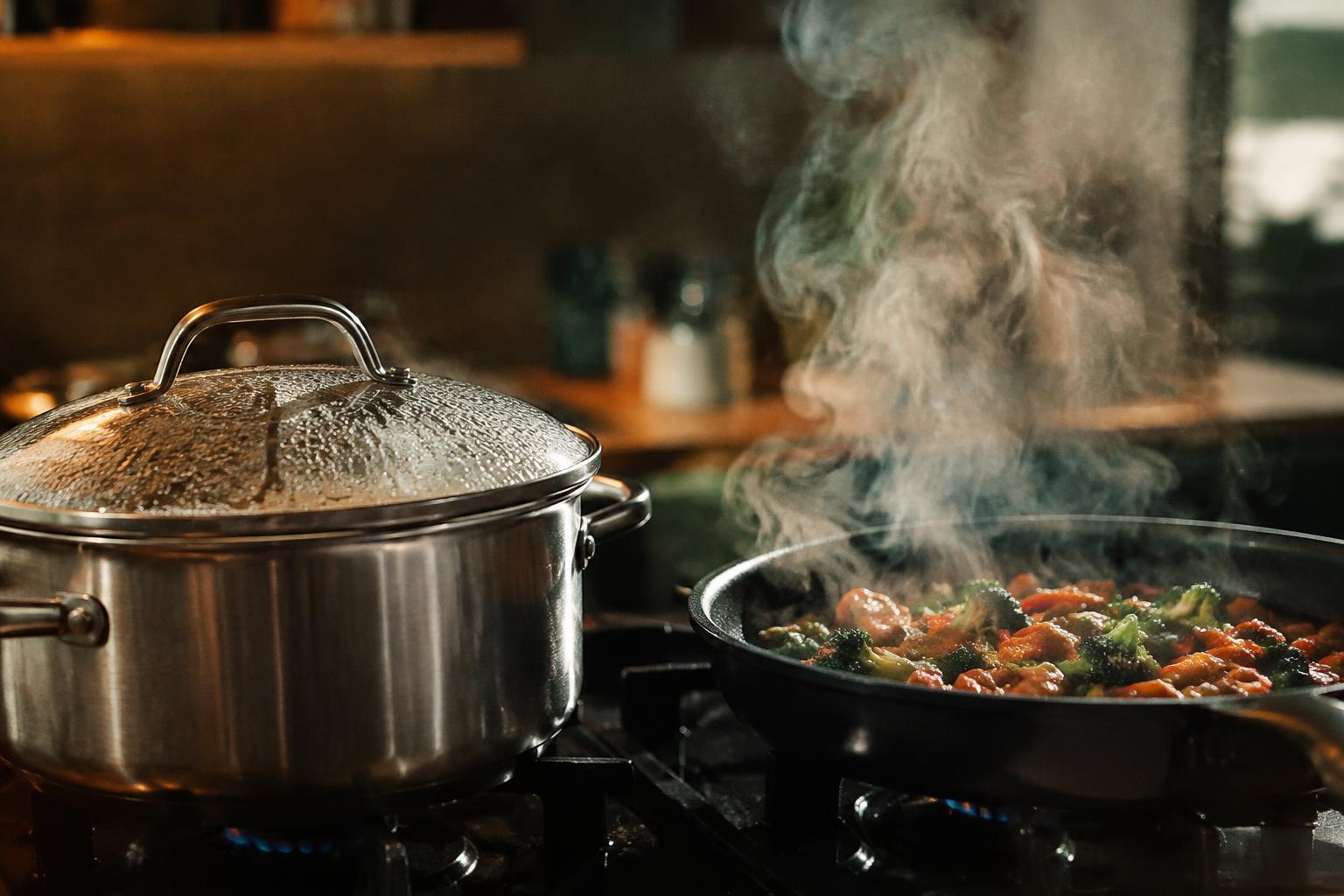
A pan lid does more than keep food contained: it traps steam, changes the cooking environment, and affects how quickly moisture escapes. Covering a pot of simmering beans softens them with retained heat, while leaving a skillet uncovered lets mushrooms brown instead of steam. Choose the right lid position for the texture and moisture your dish needs.
Key Takeaways:
- Cover a pan to trap steam and heat, which speeds cooking and keeps moisture in. A lid suits simmering soup, steaming vegetables, or softening onions.
- Leave the pan uncovered when you need evaporation, browning, or a crisp surface. Searing meat and reducing a sauce both benefit from an open pan.
- For dishes that need both moist cooking and a finished sear, cover the pan until the food is nearly cooked, then remove the lid so excess moisture can escape.
How a Lid Changes Heat, Moisture, and Cooking Time
A lid changes the cooking environment above the food as well as the temperature pattern inside the pan. With the opening covered, rising heat and water vapor remain near the ingredients; with it exposed, vapor escapes into the kitchen. The result depends on how tightly the lid fits, the pan’s material, and the burner setting. A glass lid lets you observe bubbling without releasing much heat, while a loose-fitting metal lid leaves a narrow path for steam to escape.
Trapping steam and retaining heat
Steam that collects beneath a lid transfers heat to the food and condenses on cooler surfaces, returning droplets to the pan. That moist, enclosed heat often cooks the upper surfaces more evenly than direct contact with the pan alone. A lid also slows heat loss from the pan, so the contents can reach and maintain a simmer with less burner input. On a heavy stainless-steel pot, the covered interior stays hot even when the flame is reduced.
Reducing evaporation and splatter
Covering a pan slows the escape of water vapor, so liquid remains in the cooking vessel longer and the contents lose moisture less quickly. That slower evaporation changes how fast a sauce concentrates, while a lid also catches droplets of hot oil that would otherwise land on the stovetop. A partially open lid releases some vapor but still blocks much of the splatter; a tight glass lid keeps more condensation inside, where it can drip back into the pan.
- Lift a lid away from your face to direct escaping steam away from your skin.
- Use a dry oven mitt when handling a metal lid, since its handle can heat with the pan.
- Set a hot lid on a trivet rather than directly on a countertop.
When to Cover a Pan
Choose a lid when the food needs steady heat and moisture to cook through without drying at the surface. Trapped steam warms the pan’s contents from above, while the covered environment limits moisture loss from ingredients and cooking liquid. Match the lid to the task: a snug fit suits gentle, sustained cooking, while a vented lid releases some steam. For a quick reference, these covered methods rely on retained moisture in different ways.
| Cooking task | What the lid does | Typical use |
|---|---|---|
| Simmering | Holds warmth and steam | Soup or sauce |
| Braising | Limits moisture loss | Tough cuts of meat |
| Steaming | Traps hot vapor | Fish or vegetables |
| Cooking grains | Keeps steam in the pan | Rice or quinoa |
Simmering, braising, and steaming
For a gentle simmer, cover the saucepan to keep the liquid temperature more stable and reduce heat escaping from the surface. During braising, a tight-fitting lid holds moisture around meat and vegetables as they cook slowly in a small amount of liquid. Steaming depends on trapped vapor: place food above simmering water and cover the pot so steam circulates around it. Lift the lid briefly when checking doneness, since escaping steam interrupts cooking.
Cooking grains, vegetables, and other foods that benefit from retained moisture
Rice, quinoa, and similar grains absorb a measured amount of water or stock, so keep the saucepan covered while they cook and rest; frequent lid lifting lets steam escape before the grains soften evenly. Covered cooking also suits firm vegetables such as carrots or potatoes, which need time to become tender without losing too much moisture. For frozen vegetables, add them to the pan with a little water and cover until heated through, stirring once to distribute the steam.
When to Leave a Pan Uncovered
Leave the pan open when your goal depends on water escaping rather than collecting beneath a lid. As steam leaves, the food’s surface dries, flavors become more concentrated, and browning or reduction can proceed instead of being slowed by trapped moisture. Use this approach for foods that benefit from a dry exterior or a more intense liquid, while watching closely as the remaining moisture falls. Evaporation drives the change, from crisp vegetables to a sauce that clings to a spoon.
Searing and browning
For a good sear, keep the pan uncovered so surface moisture can evaporate instead of steaming the food. Pat meat dry before it meets a hot, lightly oiled skillet; excess water cools the cooking surface and delays browning. Avoid crowding the pan, since closely packed pieces release steam that lingers between them. A dry surface browns faster, developing a browned crust on a steak or golden edges on mushrooms.
Thickening sauces and reducing liquids
Leave a sauce uncovered when you want its water content to evaporate and its flavor to grow more concentrated. A steady simmer reduces stock, wine, or tomato liquid, while stirring helps prevent ingredients from sticking as the volume falls. For an even reduction, choose a pan with a broad base, which exposes more liquid to the air. Reduction intensifies flavor and thickens the sauce until it coats the back of a spoon.
- Use a wide stainless-steel sauté pan for a broad cooking surface.
- Choose a heavy-bottomed skillet to limit hot spots during browning.
- Use a wooden spoon to stir sauces without scratching the pan.
How to Manage the Lid During Cooking
Adjust the lid as the food changes, rather than treating coverage as a fixed choice. Watch the liquid level, surface texture, and rate of bubbling, then make a small change and give the pan time to respond. A steady simmer under a lid behaves differently from an uncovered boil, so use visible cooking cues to guide each adjustment. Keep your goal specific, such as softening vegetables, reducing sauce, or finishing grains.
Partially covering a pan
Set the lid slightly askew when you want to retain some heat while letting steam escape. This works well for a soup that is close to tender but still needs to lose excess liquid, or for rice porridge that tends to foam under a fully closed lid. Leave a consistent gap rather than shifting the lid repeatedly; a narrow opening lets you control evaporation while keeping the simmer even across the pan.
Switching between covered and uncovered stages
Start covered when a dish needs trapped steam to cook through, then uncover it once the ingredients are tender and the liquid needs to concentrate. For braised chicken, keep the lid on during the gentle simmer, then remove it near the end to thicken the sauce. Reverse the sequence for a pan of vegetables: sauté uncovered to drive off moisture, then cover briefly to soften the centers. Change coverage at a clear cooking stage, not at random intervals.
| Cooking cue | Lid adjustment | Result to watch for |
|---|---|---|
| Food needs to soften | Cover the pan | Ingredients become tender |
| Liquid is still plentiful | Leave the lid ajar | Steam escapes gradually |
| Sauce needs to thicken | Remove the lid | Liquid reduces and coats a spoon |
Choosing the Right Pan and Lid
Your cookware’s shape and construction influence how steadily heat moves through food and how much steam remains beneath the lid. A compatible pair gives you more predictable control: a broad, shallow skillet releases moisture differently from a deep saucepan, while heavy materials respond more slowly to temperature changes than thin metal. Choose the pan and lid for the cooking task, with fit and material matched to the food’s volume and the burner.
Matching the lid to the pan
A lid that sits securely around the pan’s rim traps steam more consistently than one that rocks or leaves wide gaps. Use the manufacturer’s matching lid when available; a slightly domed design leaves room above simmering food, while a flat glass lid offers a clear view without lifting it. For a pan without its own lid, select one that covers the opening without extending over the burner, and keep its handle clear of direct heat.
Accounting for pan material and size
Heavy cast iron and thick stainless steel retain heat, so a covered pan tends to hold a steady temperature after the burner is lowered. Thin aluminum heats and cools faster, making moisture and temperature changes more immediate. Pan diameter also affects evaporation: a wide skillet exposes more liquid to air than a narrow pot holding the same amount. Match the lid to the pan’s full rim diameter, especially with a small burner beneath a broad vessel.
- Use a heat-resistant lid knob with a secure grip.
- Keep glass lids away from abrupt temperature changes.
- Choose a vented lid when the recipe calls for steady steam release.
Common Mistakes and Practical Checks
Before changing a lid, inspect the food and the pan rather than relying on the clock alone. A sauce that clings to a spoon needs different handling from vegetables sitting in pooled liquid, and a crowded skillet releases moisture more slowly than a single layer. Watch for sticking or scorching at the base, too, since food can overcook there while its surface still appears underdone. Stir with a heatproof spatula to check the pan bottom.
| What you observe | Likely issue | Practical check |
|---|---|---|
| Thin, watery sauce | Excess moisture | Check liquid depth and simmer uncovered |
| Dry edges, firm center | Uneven heating | Stir and inspect the burner contact |
| Food sticking at the base | Heat too high or pan too dry | Scrape gently and lower the heat |
| Steam escapes, food stays firm | Too little retained heat | Fit the lid and reassess tenderness |
Recognizing signs of too much or too little moisture
Watch the liquid in the pan: a watery sauce that barely coats a spoon signals excess moisture, while browned bits forming before vegetables soften point to a dry pan. Persistent pooling under mushrooms or zucchini often means they are releasing water faster than it can evaporate. Conversely, a matte surface, sticking, or scorched edges can indicate too little moisture. Lift food with a spatula and inspect the base before the fond turns black.
Adjusting heat and coverage as needed
Lower the burner when the contents bubble hard beneath a lid, since trapped steam can soften food past the desired texture. For a thin sauce or crisping vegetables, uncover the pan and keep the heat moderate so liquid evaporates without scorching the base. Change one control at a time, then check tenderness and liquid level after stirring. If the center remains firm while the edges brown, reduce heat and reposition the pan over the burner.
Conclusion
Use a lid when you need to trap steam, retain heat, or cook ingredients through, as with simmering soup, braising vegetables, or bringing rice to a gentle boil. Leave the pan uncovered when your goal is evaporation, browning, or a crisp surface, as when reducing a sauce or searing mushrooms. During cooking, adjust the lid as the food changes: uncover a stew near the end to thicken its liquid, or cover a pot briefly to restore a steady simmer.
FAQ
When should I cover a pan while cooking?
Cover a pan when food needs trapped heat and moisture to cook through, such as grains, steamed vegetables, or a braise. Leave it uncovered if you want a browned surface or need liquid to evaporate, and adjust coverage if the food cooks too quickly or stays too wet.
Does covering a pan make food cook faster?
Covering a pan often helps food cook faster because the lid retains heat and steam. The difference depends on the food, heat level, pan, and how tightly the lid fits, so check for doneness rather than relying on a fixed cooking time.
Can I use foil instead of a lid on a pan?
Foil can cover a pan when its shape allows a reasonably close fit and it is suitable for the cookware and cooking method. It may not seal as well as a lid, and keep it away from open flames or heating elements unless the appliance instructions allow it.
Why is my food watery when I cook it with a lid on?
Food can turn watery under a lid because steam condenses and drips back into the pan, limiting evaporation. Remove the lid or leave the pan partly uncovered to reduce excess liquid, while lowering the heat if the food is already tender and could overcook.
Should I cover a pan when searing meat?
Usually, leave the pan uncovered when searing meat so moisture can escape and the surface can brown. If the meat needs more time to cook through after browning, lower the heat and cover it briefly, since prolonged covered cooking can soften the crust.