
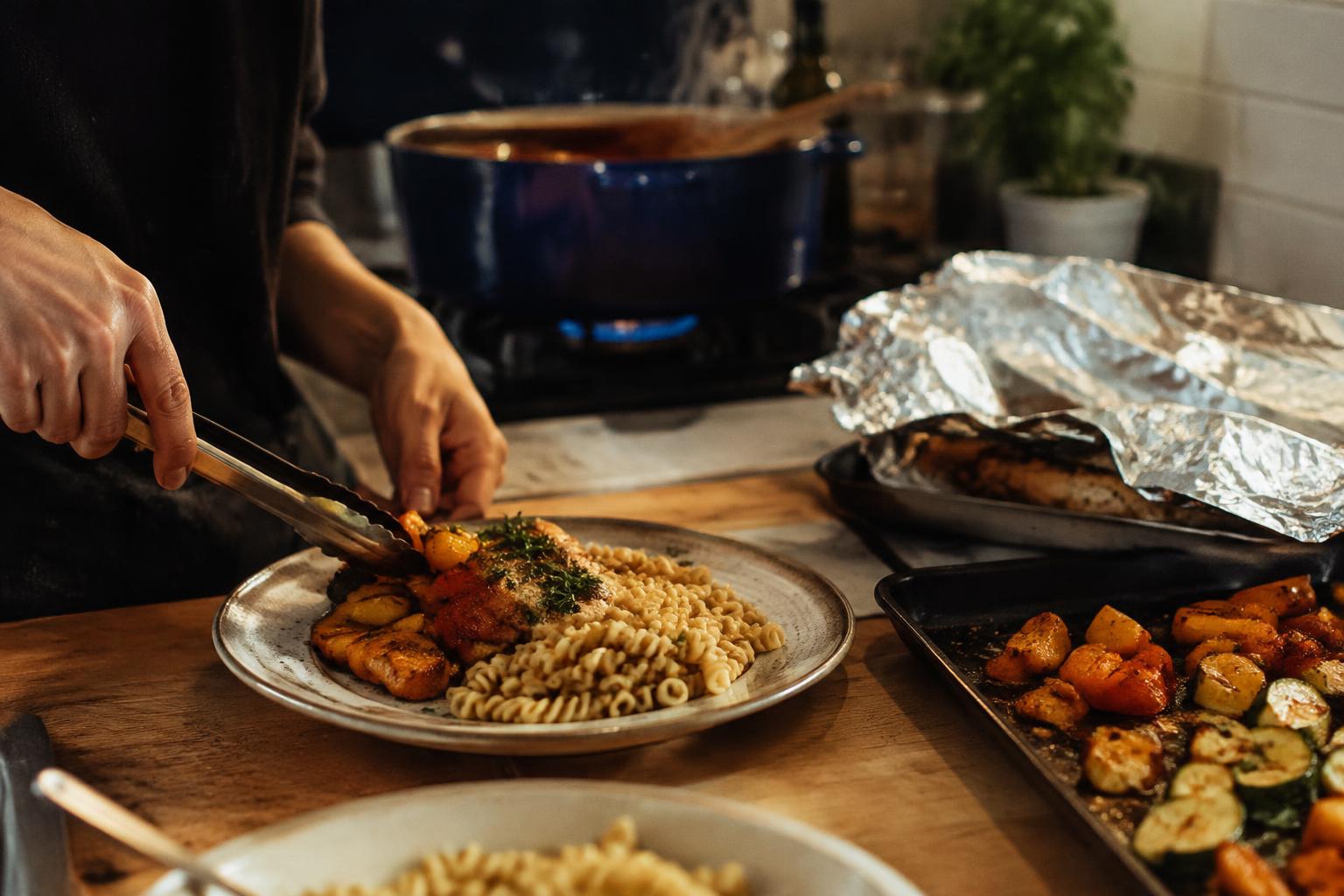
Roasted carrots can turn tender before chicken reaches a safe internal temperature, while pasta waits in the colander. Different cooking times are normal, but holding food the wrong way can affect texture and safety. Use pan heat, resting time, and a reliable thermometer to manage the gap, keeping poultry at 165°F (74°C) before serving.
Key Takeaways:
- Start long-cooking ingredients first, then add quick-cooking vegetables, seafood, or sauces near the end. A roasting pan, skillet, and saucepan can follow separate schedules.
- When an ingredient finishes early, move it to a warm oven or cover it loosely while slower components cook. Keep cooked food at a safe temperature, and refrigerate it promptly if it will not be served soon.
- Bring components together just before serving, using a brief toss in the pan or a shared sauce to restore warmth without overcooking tender ingredients.
Why Ingredients Finish at Different Times
Cooking time reflects both the food’s physical makeup and the energy reaching it. Two ingredients in the same pan do not absorb heat identically, and a method that browns one quickly may warm another slowly. Your results also depend on how pieces contact the cooking surface and whether steam escapes. These differences explain why a shared cooking time rarely suits every component, even when you prepare them together with the same heat source.
Differences in size, density, and moisture
Cut size changes how quickly heat reaches an ingredient’s center: thin carrot coins soften sooner than thick chunks cut from the same root. Dense foods, such as potatoes, take longer to heat through than tender greens, while high-moisture vegetables release water that can slow browning. Your knife work therefore affects timing as much as the ingredient itself. Uniform pieces of chicken breast, for instance, cook more evenly than pieces with sharply different thicknesses, with piece thickness shaping the result.
Effects of heat level, cookware, and cooking method
Pan material and heat setting influence how quickly food gains energy. A heavy cast-iron skillet retains heat when you add ingredients, while a thinner pan loses temperature more readily; crowded food also releases moisture and steams instead of searing. Cooking method matters too: boiling transfers heat through water, roasting exposes surfaces to hot air, and sautéing relies on direct contact with the pan. Your heat transfer changes with each technique, so the same vegetable cooks differently in a pot and on a sheet pan.
- Bone-in cuts warm more slowly near the bone.
- A lid traps steam above simmering food.
- Frozen ingredients cool a hot pan on contact.
Plan the Cooking Order
Set the sequence before you heat the pan by grouping ingredients according to their cooking time and the heat each needs. A written timeline keeps the meal moving without forcing delicate foods to wait in a hot skillet. Include the preparation step, such as chopping carrots into smaller pieces than zucchini, because cut size changes cooking time. Match the order to your equipment, whether you are using one sheet pan, a saucepan, or a crowded stovetop.
Start slow-cooking ingredients first
Begin with ingredients that need sustained heat, such as diced potatoes, carrots, or thick pieces of squash. Put them in the oven or start them in the pan before adding tender vegetables, which cook in less time. For a sheet-pan dinner, cut dense vegetables into smaller pieces and spread them in a single layer so hot air reaches their surfaces. Give firm vegetables a head start before adding quick-cooking ingredients to the same pan.
Add quick-cooking ingredients later
Reserve tender ingredients for the final part of cooking, timing their addition to the remaining cook time of the slower components. Add sliced bell peppers or broccoli florets after potatoes have begun to soften; stir delicate greens into a soup near the end, where residual heat wilts them quickly. Keep each addition ready beside the stove, since late additions need close timing, especially in a hot skillet where thin slices cook fast.
| Ingredient type | Typical examples | When to start |
|---|---|---|
| Dense vegetables | Potatoes, carrots, squash | At the beginning |
| Medium-cooking vegetables | Broccoli, bell peppers | After firm vegetables begin softening |
| Delicate ingredients | Leafy greens, fresh herbs | Near the end |
Adjust When Timing Starts to Drift
Watch the pan as ingredients change, rather than waiting for the slowest item to finish. A bubbling sauce, browning edges, or rapidly shrinking vegetables signals that heat is moving faster than the remaining cooking time requires. Use those cues to make a small correction before texture slips: a brief temperature adjustment often matters more than stirring repeatedly. Keep your attention on the ingredient that is closest to overcooking, such as sliced zucchini softening beside firm carrots.
Lower heat or move ingredients away from direct heat
When the pan is browning ingredients faster than their centers cook, lower the burner and reduce the rate of heat transfer. For a grill or sheet pan, shift delicate pieces toward a cooler zone or a less exposed edge. Move food, not just the utensil, if one section is cooking too quickly. On a gas grill, that means placing thin fish fillets over indirect heat while thicker vegetables remain above the flame.
Remove finished components and continue cooking the rest
Once a component reaches its intended texture, lift it from the cooking surface with tongs or a slotted spoon, then let the slower items continue. This is especially useful in a skillet, where tender shrimp can finish before dense chunks of potato. Use a clean plate and utensil for cooked food, particularly when raw meat or seafood has been in the pan. Check the remaining ingredients for doneness before combining them.
- Turn pan handles away from the edge of the stove.
- Use a spatula to separate crowded pieces.
- Scrape browned bits before they scorch.
Hold Finished Ingredients Safely
Choose a holding method based on how long each ingredient must wait and how easily it loses moisture or texture. Keep hot foods at a safe temperature, and keep cold foods chilled rather than leaving them on the counter. Use a food thermometer for temperature checks, and keep ingredients covered with suitable lids or foil to limit contamination. A shallow container also makes cooling more effective when you need to refrigerate a cooked component.
Keep cooked ingredients warm without drying them out
Set cooked vegetables, grains, or meat in a covered oven-safe dish in an oven kept at or above 140°F (60°C), the recommended hot-holding temperature. Add a small amount of cooking liquid to rice or braised meat before covering, since gentle heat can still dry exposed surfaces. For a short wait, an insulated container retains heat without continued cooking. Check the center with a food thermometer, especially for thick portions.
Refrigerate ingredients if the wait will be prolonged
For a longer delay, transfer cooked food to shallow containers and refrigerate it promptly, rather than letting it cool on the counter. Divide a large batch of soup or stew into smaller portions so heat escapes faster, and keep the refrigerator at 40°F (4°C) or below. Store raw ingredients separately from cooked food, with containers covered to prevent drips or contact. Reheat leftovers to 165°F (74°C) before serving.
| Situation | Holding method | Key detail |
|---|---|---|
| Short wait, hot food | Covered dish in a warm oven | Keep at or above 140°F (60°C) |
| Longer delay | Shallow, covered containers in the refrigerator | Keep at or below 40°F (4°C) |
| Reheated leftovers | Heat thoroughly before serving | Reach 165°F (74°C) |
Bring Components Together for Serving
At the table, bring separately cooked components into balance with a final taste and a measured addition of salt, acid, or fat. A spoonful of broth can loosen grains, while lemon juice can brighten vegetables beside rich meat. Taste the combined dish rather than seasoning each part in isolation, since flavors shift once ingredients meet. Keep the adjustments small, then serve while the textures remain distinct and the overall seasoning tastes even.
Reheat gently and evenly
Use a wide skillet or saucepan to reheat chilled components over low to medium heat, stirring or turning them so the center warms without scorching the edges. Add a splash of water, stock, or cooking liquid when rice, beans, or roasted vegetables look dry; cover briefly to trap steam. Heat dense pieces thoroughly, then remove the pan from the burner before delicate textures soften. For food safety, bring leftovers to 165°F (74°C), measured at the center with an instant-read thermometer.
Add delicate ingredients and finishing touches last
Fold tender herbs, baby spinach, cooked seafood, or soft cheese into the dish after the heat is off, using residual warmth to soften or warm them without breaking them apart. Add toasted nuts, crisp breadcrumbs, and fresh citrus zest just before serving so moisture does not dull their texture. Finish with a small drizzle of olive oil or a pinch of flaky salt, then plate promptly while the crunch stays crisp.
- Warm serving bowls with hot water, then dry them before plating.
- Use a slotted spoon for vegetables served beside a pooled sauce.
- Keep a clean tasting spoon separate from the stirring utensil.
Improve Timing for Future Meals
Reliable timing starts before the pan heats: preparation and brief notes give you a consistent record to use the next time you cook a familiar meal. Keep a small notebook or a note on your phone, and record the cookware, heat level, ingredient sizes, and when each item went into the pan. Specific details make the entry useful, such as “carrots cut into 1-centimeter pieces” rather than “small carrots.”
Cut ingredients to consistent sizes
Uniform cuts cook at a more predictable rate because pieces of similar thickness receive heat similarly. Before cooking, group ingredients by type and trim them to a consistent size, such as evenly sliced onions or potato cubes cut to a similar width. A chef’s knife and cutting board are usually enough; a ruler is unnecessary for everyday meals. Match thickness first, especially for dense vegetables such as carrots, where a thick piece can remain firm after thinner pieces soften.
Record timing adjustments for familiar recipes
After cooking, note the actual cooking time for each ingredient beside the recipe step, along with changes to pan size or burner setting. A margin note such as “broccoli added after onions softened” is more useful than a general comment that dinner took longer. Record whether you used a lid, since covered pans retain steam and cook ingredients differently. Write notes immediately, while details such as the burner setting and texture are still clear.
| What to record | Useful detail | Where to note it |
|---|---|---|
| Cut size | Carrot pieces cut to similar thickness | Ingredient list |
| Heat setting | Medium heat on the front burner | Recipe step |
| Pan setup | Wide skillet, lid off | Recipe heading |
Final Words
Different cooking times do not have to disrupt a meal. Set a clear order, use a timer for longer steps, and adjust heat or pan space as ingredients approach doneness. Remove finished food to a warm plate when appropriate, and keep raw ingredients separate from cooked ones. Before serving, combine components that benefit from a final toss, while leaving delicate items such as crisp vegetables out until the last moment.
FAQ
What should I do when ingredients finish cooking at different times?
Remove ingredients that are fully cooked and continue cooking the rest until done. Keep the finished food covered and warm for a short wait, or refrigerate it if the delay will be prolonged; reheat it gently before serving.
How can I keep cooked food warm without drying it out?
Cover cooked food and hold it in a warm oven or another reliably warm place. Use gentle heat and check delicate ingredients often, since continued cooking can dry them out; refrigerate food rather than leaving it at room temperature for a prolonged wait.
Can I cook vegetables and meat together if they need different cooking times?
Yes, add each ingredient according to how long it needs to cook and ensure meat reaches a safe internal temperature. If you cannot time the additions reliably, cook the components separately and combine them near the end.
What is the best way to reheat ingredients that finished cooking at different times?
Reheat the components gently, stirring or turning them so they warm evenly, and add delicate ingredients near the end. If the ingredients need different amounts of reheating, warm them separately before combining them.
Does cutting ingredients to the same size help them cook evenly?
Yes, pieces of similar size tend to cook more evenly because they heat at a similar rate. Size alone does not determine cooking time, so account for differences in density, moisture, and cooking method, and check that each component is done.