
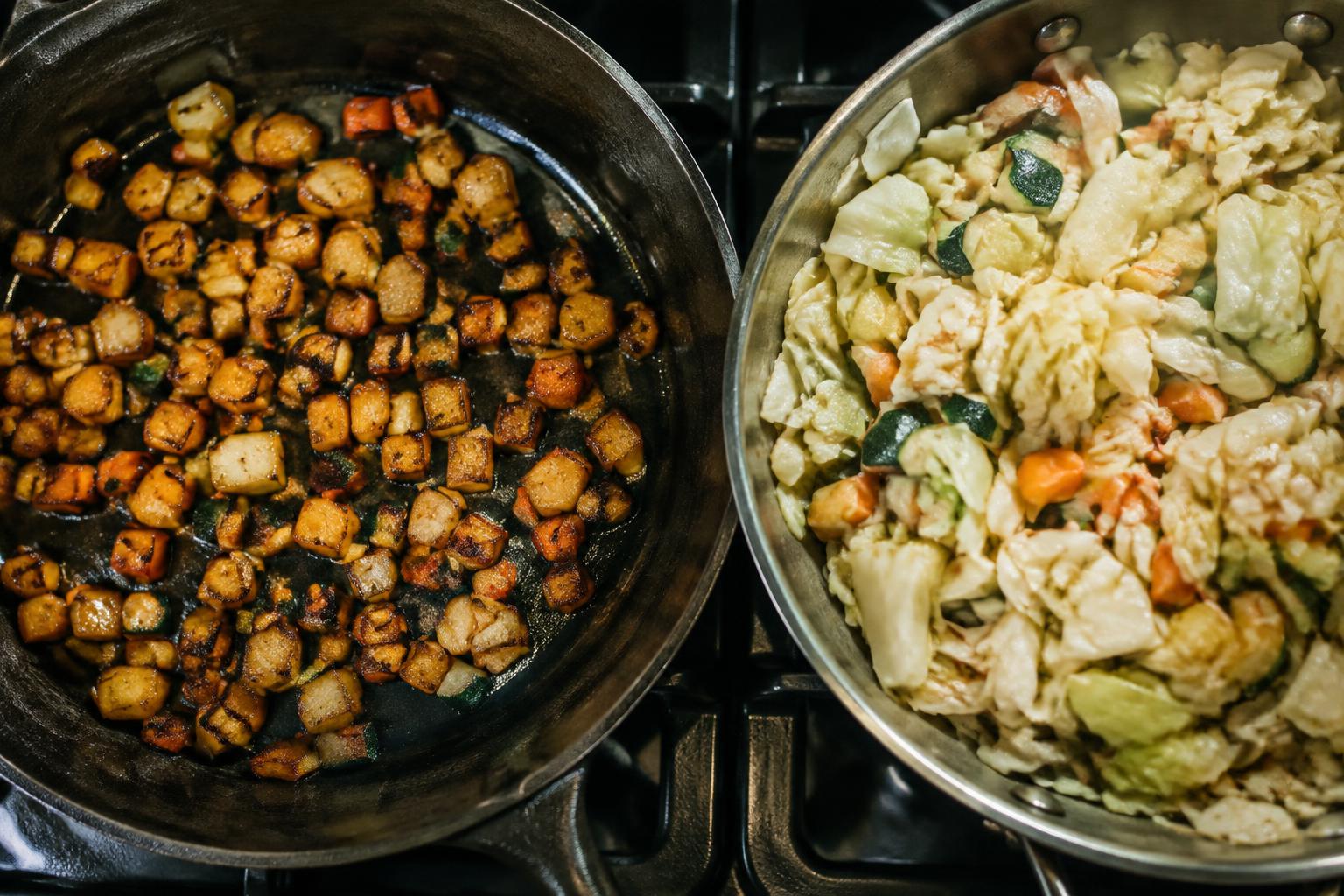
Overcrowded pans trap steam, block hot air, and leave food with uneven color and texture. By cooking smaller batches, you give each piece room to contact the pan or circulate heat, producing more consistent results with less guesswork. A single uncrowded layer of vegetables, for instance, browns more evenly than a deep pile in a skillet.
Key Takeaways:
- Smaller batches leave more space around each piece, so hot air circulates more freely in an oven and food browns with fewer pale or overcooked spots.
- Arrange food in a single layer on a suitable pan, with gaps between pieces; crowded trays trap steam and cause uneven browning.
- Cook separate batches when a pan or pot is crowded, and use the food’s color, texture, and internal temperature to judge doneness rather than relying on the timing for a larger batch.
Why Small Batches Cook More Evenly
With less food competing for the same hot surface, heat reaches each piece more consistently. Air moves around ingredients in an oven, while hot oil circulates more freely around food in a pot. Smaller loads also release less moisture at once, limiting the temperature drop that can slow cooking and leave portions uneven. You see the difference in a crowded sheet pan, where overlapping vegetables steam beneath a layer of trapped vapor instead of browning at their edges.
How Crowding Affects Heat and Moisture
When pieces touch or overlap, they block hot air and create damp contact points. Moisture released by vegetables, meat, or tofu accumulates between crowded pieces, so surfaces soften instead of browning. In a skillet, a heaped layer also cools the cooking oil, lengthening the time food spends absorbing moisture. Uncovered space around each piece lets steam escape and exposes more surface to heat, leaving diced potatoes with crisp faces rather than pale, soft sides.
When Smaller Batches Make the Biggest Difference
Wet, bite-sized ingredients show the strongest change because they release moisture quickly and have many cut surfaces exposed. Mushrooms, zucchini, and diced chicken are especially prone to steaming in an overloaded pan. Frozen foods also chill the cooking surface as they thaw, so adding a large quantity at once can stall browning. Fast-cooking, moisture-rich foods benefit from a lighter load, particularly when you want browned mushroom edges or a well-seared chicken surface.
- Keep cut pieces in a single layer.
- Leave visible gaps between vegetables.
- Use a wide spatula to turn food without compressing it.
Choosing the Right Batch Size
Choose a batch that fits the cooking surface without crowding it, then keep that amount consistent from one round to the next. Your pan, oven capacity, and cooking method set practical limits: food needs room for hot air or cooking liquid to reach its surfaces evenly. A skillet batch of vegetables, for instance, should leave visible pan space between pieces. Usable cooking space, rather than the recipe’s total yield, determines how much to prepare at once.
Factors That Determine Batch Size
Pan area, oven rack space, food shape, and cooking method all affect how much you can cook evenly at once. A crowded skillet traps steam between pieces, while an overloaded roasting pan blocks hot air from circulating around vegetables. For sautéing, keep ingredients in a loose layer; for simmering, make sure the food remains covered by liquid. Surface contact and airflow matter more for dry-heat methods than for foods cooked in a pot of broth.
How to Divide Food into Consistent Portions
Use a kitchen scale, measuring cup, or portion scoop to divide ingredients into comparable amounts before cooking. Keep pieces similar in size as well as weight, since thick potato chunks take longer to cook through than thin ones. For a large quantity of chopped vegetables, weigh each skillet load and spread it in an even layer. Consistent piece size makes each batch respond similarly to the same cooking method.
| Cooking method | Batch-size guide | Practical limit |
|---|---|---|
| Skillet sautéing | Single loose layer | Leave pan surface visible between pieces |
| Oven roasting | One uncrowded layer | Keep pieces clear of one another |
| Simmering in a pot | Fit within the available liquid | Keep food submerged as the recipe requires |
Setting Up Pans and Equipment
Arrange your cooking surface so each piece receives similar contact with heat and has room around it. On a stovetop, choose a burner that matches the pan’s base; in an oven, center the rack and use a level shelf. Stable, well-matched equipment reduces hot spots caused by overhanging cookware or a tilted tray. Set out the utensils you need before cooking, such as a thin spatula for turning small pieces.
Leave Space Between Pieces
Spread food in a single layer, leaving visible gaps so hot air can move around each piece and moisture can escape. Crowding a sheet pan traps steam between ingredients, which can soften surfaces and create uneven browning. Keep pieces from touching, especially with vegetables that release water, such as mushrooms. If the batch does not fit with space around it, use a second tray rather than piling food into the first.
Choose the Right Pan or Tray
Match the cookware to both the food and the heat source. A heavy, light-colored aluminum sheet pan distributes oven heat evenly, while a thick skillet provides steady contact on a burner. Use a flat, unwarped base to avoid areas that sit closer to the heating element. Avoid lining a pan with material that blocks airflow or covers more surface than the recipe requires; keep parchment trimmed inside the tray’s rim.
- Keep oven racks level and unobstructed.
- Use a burner no wider than the skillet’s base.
- Dry washed produce before placing it on the tray.
Adjusting Cooking Time and Temperature
Smaller loads heat through faster because less food absorbs energy from the oven, pan, or appliance. Keep the set temperature as directed, but begin checking earlier than the recipe’s stated finish time rather than making a large temperature change. For a shallow tray of vegetables, start testing well before the full-batch estimate. Use the same rack position and preheat fully, so your timing reflects the reduced load rather than a cold oven or altered setup.
How to Check for Doneness
Use a reliable thermometer for foods with a safe internal-temperature target, inserting the probe into the thickest portion without touching the pan. For baked goods, check the center with a clean skewer or gentle pressure, since browning alone does not confirm the interior is done. Open the oven briefly and close it promptly to limit heat loss. Record the time at the first successful test, such as when a cake’s center springs back without leaving an indentation.
Tips for Preventing Overcooking
Set a timer for an early checkpoint, not just the recipe’s final time, and stay nearby as the smaller load approaches doneness. A hot skillet or baking sheet continues transferring heat after you remove it, so move finished food to a cool plate or rack rather than leaving it on the cooking surface. For oven dishes, switch the appliance off once the center reaches its target and remove the pan promptly to limit carryover cooking.
| Adjustment | What to do | Why it matters |
|---|---|---|
| First doneness check | Check earlier than the full-batch recipe time | Smaller loads heat through faster |
| Temperature setting | Keep the recipe temperature unless results indicate otherwise | Avoids unnecessary changes to browning and texture |
| Thermometer placement | Probe the thickest part without touching the pan | Provides a more representative internal reading |
| After cooking | Move food off hot cookware promptly | Limits carryover cooking |
Applying the Method to Different Foods
Match each food to the way heat moves through it, rather than treating a small portion as a scaled-down version of a full pan. Cut size, moisture, and thickness determine whether you should spread ingredients apart, turn them, or arrange them in a single layer. With a little attention to those differences, you can use small, consistent portions while preserving the texture you want, from crisp-edged vegetables to evenly browned baked goods.
Vegetables, Proteins, and Baked Goods
For vegetables, cut pieces to a similar size and leave space around them so moisture can escape; dense carrots need smaller pieces than tender zucchini. Pat proteins dry, then place pieces of similar thickness together, positioning chicken thighs skin-side up or salmon portions with their thick ends toward the hotter area. In baking, use the pan size specified by the recipe and portion batter evenly into each cup. Uniform thickness matters most for chicken breasts and muffins.
Stovetop, Oven, and Air-Fryer Tips
On the stovetop, choose a burner that matches the pan base and cook ingredients in a single layer, stirring or turning as needed for contact with the hot surface. In an oven, center a small sheet pan on the rack and avoid covering it with foil, which can trap steam around vegetables. For an air fryer, arrange food in one layer and leave the perforated basket floor visible between pieces; airflow through the basket is key for crisp fries or wings.
- Use a wide spatula for turning delicate fish portions.
- Line muffin cups with paper liners for easy release.
- Choose a heavy skillet for steady stovetop heat.
Troubleshooting Uneven Cooking
When a small batch still cooks inconsistently, trace the result to a specific point in the process rather than changing several settings at once. Pale centers, scorched edges, and patchy browning each signal different problems, from uneven heat to poor airflow. Note which pieces finish first and where they sit in the pan, then adjust one variable and cook the next batch. A brief record of position and color can reveal a recurring oven pattern.
Address Hot Spots and Uneven Browning
Rotate the pan halfway through cooking if the back of your oven browns food faster than the front. For stovetop batches, move pieces between the center and edge of the skillet, where burner heat differs. Use an oven thermometer to spot inaccurate temperature readings, and spread ingredients into a single layer so each surface contacts the pan. If one side remains pale, turn the pan or food; dark edges often point to direct contact with a hot spot.
Avoid Frequent Door Opening and Overcrowding
Each oven-door opening releases heat, which can slow cooking and make delicate items such as biscuits set unevenly. Check progress through the window, then open the door only when a planned rotation or doneness test is due. In a crowded skillet, ingredients release moisture and steam instead of browning; cook in separate rounds if pieces touch or overlap. Leave space between items, and use a single uncrowded layer on the baking sheet.
| Symptom | Likely cause | Correction |
|---|---|---|
| Back edge browns first | Oven hot spot | Rotate the pan |
| Pale, soft surfaces | Overcrowding or trapped moisture | Space pieces apart |
| Slow or uneven setting | Frequent door opening | View through the window |
Final Words
Small batches give heat more room to circulate, making it easier for you to cook food evenly without crowding pans or trapping steam. Match the batch to your equipment, spread ingredients in a single layer, and use a consistent cut size so pieces finish at roughly the same time. For soups and sauces, stir regularly and keep the pot at a steady simmer. When a recipe exceeds your pan’s capacity, cook it in separate rounds rather than piling ingredients together.
FAQ
Is making small batches of food worth the extra time?
Making smaller batches is often worth the extra cooking time when crowded pans cause steaming, uneven browning, or inconsistent doneness. It may take longer overall because you cook in rounds, but the tradeoff matters less for foods that cook quickly or do not need much space.
How do I make small batches of food cook more evenly without drying them out?
Use a consistent portion size, leave room for heat to circulate, and start checking doneness earlier than you would for a full pan. Smaller loads can cook faster, but the timing depends on the food, appliance, pan, and temperature, so check the food rather than relying only on a timer.
What is the most common mistake when cooking food in batches?
The most common mistake is filling the pan or tray so tightly that pieces overlap or touch. Crowding traps moisture and blocks heat from reaching surfaces evenly; cook in another round if needed, and keep finished food warm without covering it so tightly that it steams.
Can I cook a half batch at the same temperature as a full batch?
Usually, you can keep the recipe temperature and reduce the cooking time as needed. A smaller load may heat or brown faster, but some recipes depend on a particular pan fill or food arrangement, so follow the recipe and check for doneness early.
Is using a larger pan a good alternative to cooking several small batches?
A larger pan can help if it fits the appliance and spreads the food into a single layer with space between pieces. If the food still crowds together, or the larger pan heats unevenly in your oven or on your burner, cooking in separate rounds is more reliable.